
Virtual Reality in Mexico: 2026 Guide to Uses, Vendors and Costs
 By Carlos Franco, Co-Founder & CEO at Fyware · LinkedIn
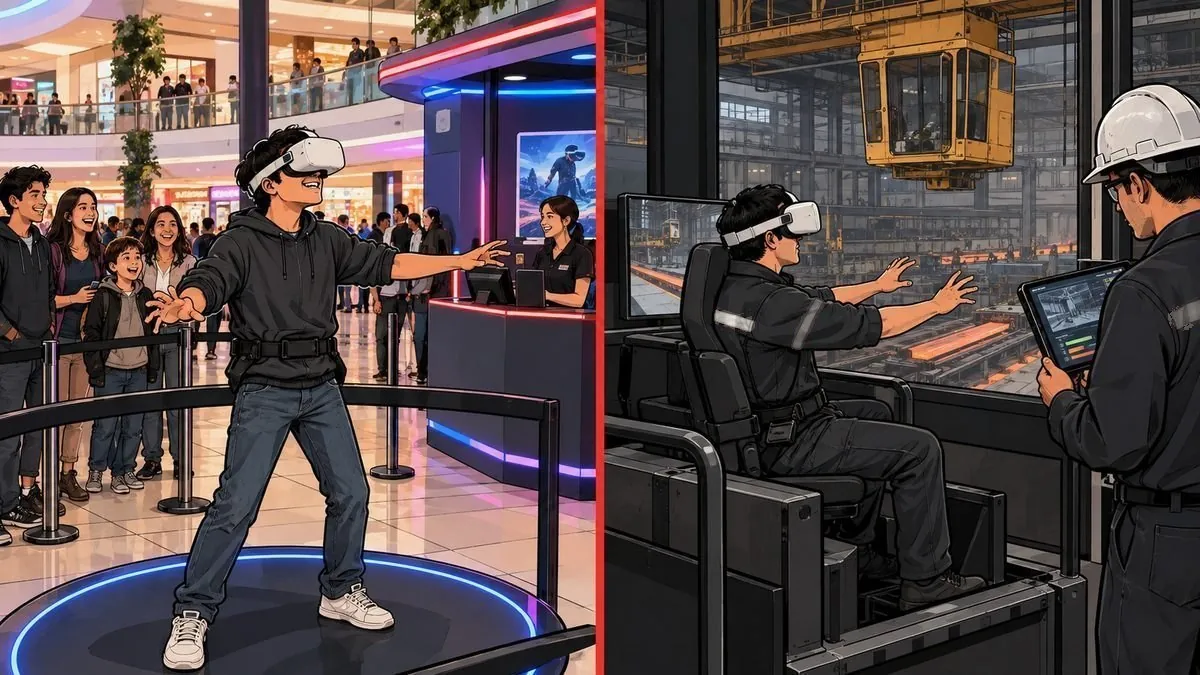
The short answer: virtual reality in Mexico lives in two markets that do not touch. One is entertainment, with arcades and free-roam arenas in the malls of Mexico City, Guadalajara and Monterrey. The other is enterprise, where what gets bought is industrial training, safety simulators, real estate walkthroughs and event activations, increasingly by US companies that build here nearshore. A custom enterprise project delivered to a US customer starts at $15,000; the same project delivered inside Mexico starts at $10,000.
"Isn't that for gaming?" A plant manager asked me that in 2019, in the first meeting of what is now eleven simulators in a steel mill. He was half right: at Plaza Carso in Mexico City there is a line of people waiting to put on a headset, and 250 miles away, in that steel mill, there is another line for the same thing. Only one of the two leaves a record per person. This guide is for the second line, and gives the first an honest paragraph.
What is virtual reality in Mexico used for today?
In our own operation, 750+ projects since 2017, enterprise virtual reality splits into five uses, in order of maturity. Industrial training and safety, where practicing for real costs production or puts the person at risk: cranes, fires, confined spaces, forklifts. Real estate pre-sales, with walkthroughs of apartments that do not exist yet. Medical procedures, such as sterile setup. Marketing and events, with branded simulators and activations. And industrial visualization of plants and machinery before they are built.
Demand is measured in invoices: with 2019 activity as base 100, 2024 closed at 544, and 37% of 2026 work is international, most of it for US customers. The full curve, and why US teams build here, is in the virtual reality market in Mexico: reports vs invoices.
Playing or training: the two markets of virtual reality
If you are looking for where to try it, this is what exists, according to their own sites: Inspark, a virtual reality park in Plaza Carso, Mexico City; Virtuality World, headset gaming centers in Guadalajara, Monterrey and other cities; and free-roam arenas in Mexico City such as Zero Latency and Omnia VR. They sell minutes of experience.
The rest of this guide belongs to the other market, the one that buys records per person: who did the procedure, where they made mistakes and whether they repeated it until they got it right. The two share the headset and almost nothing else.
Which virtual reality companies operate in Mexico?
More than fit in a paragraph, and we compare them with criteria in our guide to VR and AR companies in Mexico. The short criterion for reading that list: separate operations vendors from marketing agencies, ask whether the project runs offline on the plant floor, request metrics from previous cases and demand price ranges before the first call. Fyware is on that list, so read it with that in mind. If you are hiring from the US, how to hire a nearshore VR team in Mexico covers contracts, IP and time zones.
What a headset costs and what a project costs
Two different scales, best kept apart.
Hardware is the small expense. Renting a configured headset with your content loaded starts at MXN 2,500 a day, about US$140, through our VR equipment rental; buying makes sense when use is weekly. The project is the large expense: a custom simulator starts at $15,000 for delivery outside Mexico and $10,000 inside, and rises with the number of procedures, realism and integration with your data. In time, an awareness experience takes about a month, a training simulator about three, and a complex project three to six. The generic safety simulators in Fyware Safe, fire, PPE and forklift, are ready and take one to two weeks to brand. The full breakdown is in how much VR training costs.
Five Mexican projects, with their numbers
- Gerdau Corsa trains its own crane operators on a crane operator training simulator: eleven modules delivered, ten hours of simulator time a month and zero production stops to train, in a program that has kept growing for seven years.
- GIM Desarrollos reviewed the design of Zen Town in a real-scale model built from its own drawings and found four interior details the drawings did not show; the apartments were built with the corrected kitchen.
- Mabe uses industrial VR visualization to walk through machinery and plants before touching them.
- medverse trains sterile setup on a medical procedure VR simulator, with evidence per person, built nearshore for a German company.
- Mezcal Patatús sells its story with a 360 virtual tour of the distillery, without flying the buyer to Oaxaca.
The figures are what each customer reports, and that is how to read them.
How to start without burning budget: brief, pilot and KPI
Write the procedure first; the feature list comes out of it. The one-page format is in when the VR project brief is the first obstacle. Pick the procedure that repeats the most and leaves the worst trail, anchor one indicator from day one and ask for a scoped pilot in custom industrial training. Projects that die in the pilot die from a missing business case, and that is decided before buying the first headset.
At the steel mill the indicator was production stops to train. Seven years later it is still zero.
Frequently asked questions
How much does a virtual reality headset cost in Mexico?
Rented and configured with your content, from MXN 2,500 a day, about US$140. Buying makes sense when use is weekly; in an enterprise project the hardware is the small part of the cost compared with the content and its maintenance.
Where can I try virtual reality in Mexico?
At entertainment parks and arenas such as Inspark in Plaza Carso, Virtuality World in Guadalajara and Monterrey, and Zero Latency or Omnia VR in Mexico City. For an enterprise demo, at the customer's plant with rented equipment.
Which Mexican companies use virtual reality?
Manufacturers such as Mabe to visualize machinery, developers such as GIM to review designs before building, and brands such as Mezcal Patatús for tours of their distillery.
How long does a custom virtual reality project take?
About a month for an awareness experience, about three months for a training simulator and three to six for a complex project. Generic safety simulators are ready and take one to two weeks to brand.
Virtual or augmented reality for my plant?
Virtual when practicing for real is expensive or dangerous; augmented when the real equipment is available and the instruction is missing. The full comparison is in virtual reality vs augmented reality.
Before asking for quotes, bring your own number to the meeting: industrial VR training ROI calculator.
 Tom Klukowski
Fyware Partner · Valcre Marketing
Before we quote, we check whether virtual reality fits your operation
Fyware has delivered 750+ XR projects for clients like Gerdau Corsa, Cummins and Medverse, from Mexico in US Central Time. Tell us your case and we will tell you what is feasible, how long it takes, and on what budget.
Get the next articles
Practical guides on VR, AR and industrial training. No spam: we only write when we publish.