
Medical procedure simulator in virtual reality
Practice the sterile setup. Spend zero supplies.
medverse builds 3D training software for healthcare and runs its own virtual reality team. Fyware came in as extra capacity for that team and built the simulation used to practice the full sterile setup, from the instrument tray to donning the surgical gloves.
- Industry
- Healthcare and clinical training
- Use case
- Sterile setup practice
- Technology
- Windows and macOS, no headset
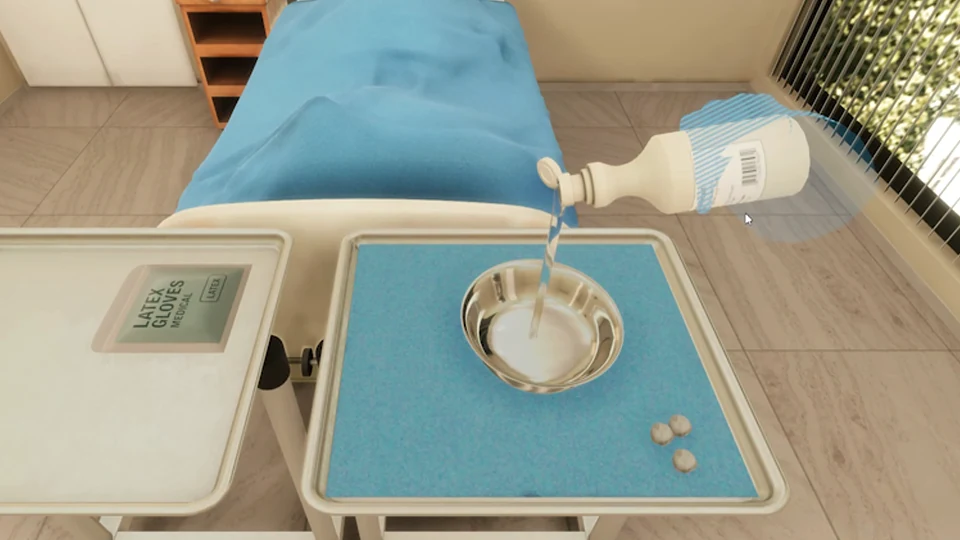
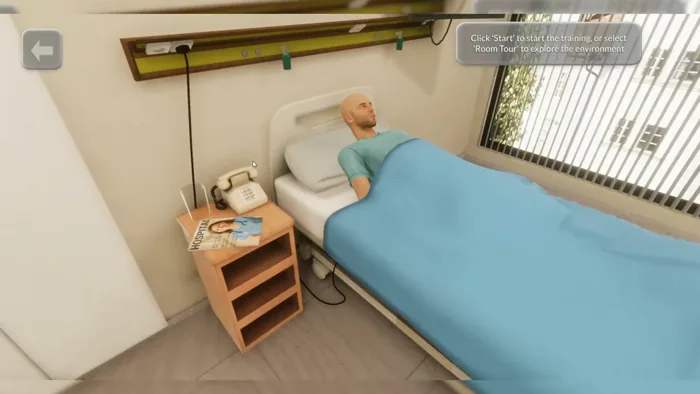
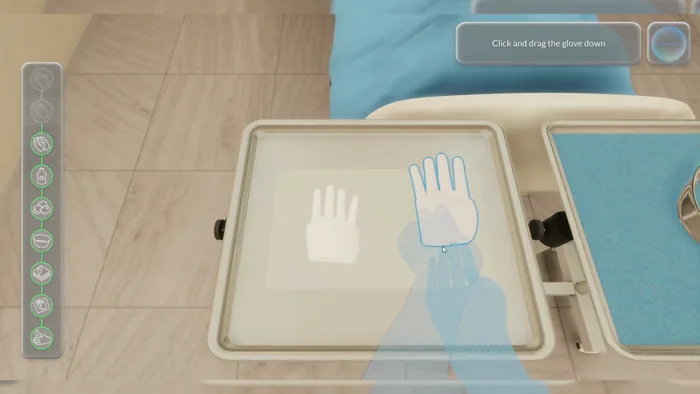
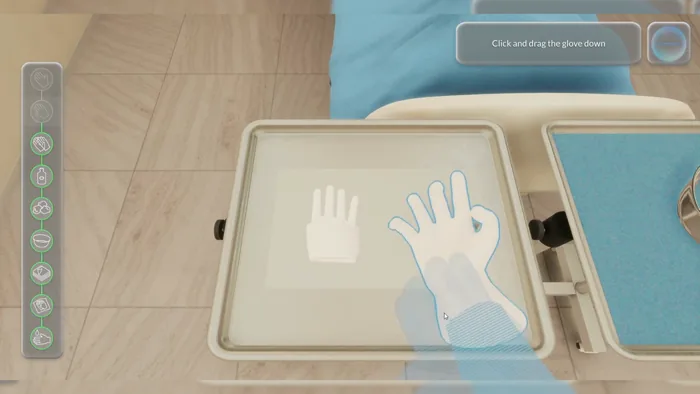
medverse GmbH is a 3D training software company based in Munich, Germany, building product for the healthcare sector. Fyware built them an immersive training simulation that walks the user through the correct sterile setup techniques for medical equipment, from instrument trays to surgical gloves, with interactive hands-on tasks and mouse-and-keyboard controls. It runs on Windows and macOS, with no headset.
The figures and where they come from: zero sterile supplies per repetition, because the cost sits in building the simulation once and from there repeating consumes no material and ties up no supervisor; and no headset, because the delivered scope runs on the machine the hospital already owns. The clinical content, the protocols and the teaching decisions are medverse's: Fyware is not a medical expert and built to that specification. Delivered in 2025, in Unity.
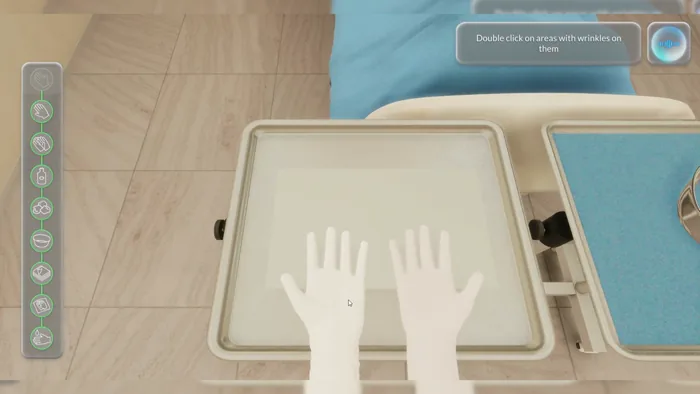
What was built is a medical procedure simulator for practicing sterile technique: the whole procedure, executable step by step and in the right order, as many times as it takes.
How it was decided
Sterile technique is learned by repeating it, and repeating it costs material
The problem
A sterile preparation mistake costs infections and rework, and the only way it does not happen is for the person to have done the procedure many times. Practicing it physically consumes sterile material and supervision hours, so in practice it happens rarely and with few people.
What medverse brings
The protocol, the correct order of every step and the teaching decisions. medverse is the healthcare training software company and the domain expert; Fyware is not, which is why the clinical content is not argued from our side.
What we built
The guided simulation in Unity for Windows and macOS: the interactive tasks, the behavior of every object on the sterile field and the mouse-and-keyboard controls, so practice does not wait on a hardware purchase.
Inside the simulation
The whole procedure, in the order it is performed. Every step can be repeated without consuming anything.
“The clearest differentiator was that Fyware operated as a partner rather than a vendor.”

What makes it work
Four decisions worth repeating
- The domain expert is the client. The protocol and the teaching decisions are medverse's, and the simulation is built to that specification.
- No headset when a headset adds nothing. What has to be learned here is the order and what you touch; that is practiced with a mouse and a keyboard.
- The cost sits in building it once. After that, a repetition consumes no supply and occupies no supervisor, so practice stops being rationed.
- Extra capacity for their own team. medverse runs its own virtual reality team and uses us when the pipeline grows faster than their hours.
The product, the clients and the clinical content are medverse's. We built this simulation with their team and to their specification.
Can a sterile procedure be practiced without spending material?
The order and the judgement can, and that is where sterile technique is actually lost. It rarely fails because somebody cannot pull on a glove: it fails because they touched what they should not have, opened the pack at the wrong moment, or laid out the field in an order that later forced them to reach across it. That is a sequence of decisions, and a sequence of decisions does rehearse on a screen.
What does not rehearse on a screen is the fine motor gesture. That is why this project has no headset and does not pretend to replace supervised practice: it replaces the expensive part, which is running the procedure fifty times until the order becomes automatic, and leaves the physical world the part only the physical world teaches. Deciding that project by project beats deciding it from a catalog.
The practical consequence is about availability. When every repetition costs material and a supervisor, practice gets rationed: few people, few times, on the day somebody is free to watch. When a repetition costs nothing, anyone can do it, at any hour, as often as they want, on the computer already sitting in the room. With that, people get to practice often.
All of that content is medverse's. They define what is correct at each step because it is their specialty and their product; we supplied the development team when their pipeline grew faster than their hours. It is the same arrangement they describe in their public review, and the one we offer as Team as a Service.
Project details
- Client
- medverse GmbH, 3D training software · Munich, Germany
- Sector
- Healthcare and clinical training
- Scope
- Guided simulation of sterile medical equipment setup
- Procedure
- From the instrument tray to donning the surgical gloves
- Platform
- Windows and macOS, with mouse and keyboard. No headset
- Technologies
- Unity
- Clinical content
- medverse's. Fyware built to their specification
- Delivered
- 2025
Frequently asked questions
How do I know whether my people actually learned anything in VR training?
By watching them execute. A quiz measures memorized knowledge, and that is not what a simulator is there to fix: the meta-analysis by Howard, Gutworth and Jacobs (Computers in Human Behavior, 2021) finds a moderate overall effect (d = 0.541) that fades or soars depending on how well the task fits the technology: d = 0.207 when the fit is poor, d = 0.820 when it is strong. The useful evidence is the execution itself. In this simulator the person walks through the full sterile setup step by step and in the right order, so what you observe is the procedure performed. When the session is a group wearing headsets the problem changes, because nobody can see what happens inside the headset, and that is why we built Fyware Hub.
Practicing the sterile technique burns supplies, is there a way to repeat it without spending them?
Yes, and it is the reason this project exists. In the physical world every repetition consumes sterile material and supervision hours, so it happens rarely and with few people. In the simulation the sterile supplies per repetition are zero: the cost is building it once, and from there repeating consumes nothing and does not tie up a supervisor.
Do I need to buy headsets to train people on a procedure?
Not always, and the procedure should decide it. If what has to be learned is a physical movement, the headset and the real controls matter. If what has to be learned is the sequence, and what you touch and what you do not, a computer is enough. This simulation runs on Windows and macOS with mouse and keyboard, on the machine the hospital already owns, which takes a hardware purchase off the path to the first practice run.
Who defines the clinical content, you or us?
The client. Fyware is not a medical expert and medverse is: the protocol, the correct order of the sterile setup and the teaching decisions are theirs, and we build the simulation to that specification. That is how Team as a Service works, the team that owns the domain directs the content and we supply the development capacity.
 Tom Klukowski
Fyware Partner · Valcre Marketing
Want a result like this in your operation?
Fyware has delivered 750+ XR projects for clients like Gerdau Corsa, Cummins and Medverse, from Mexico in US Central Time. Tell us your case and we will tell you what is feasible, how long it takes and what it costs.
We supply the virtual reality development team you are missing, to your specification and with your product out front.
Meet Team as a Service Crane operator training simulator
 Anti-theft protocol simulator
 Team as a ServiceThe full line