
Interactive architectural visualization in real-time 3D
It sold off plan. With nothing built to show.
A large resort development is sold by explaining the whole, and the whole is exactly what a printed masterplan explains badly. Fyware built the virtual scale model of the entire development in Unreal Engine 5 and delivered it by cloud streaming, so the buyer explores it from the browser with nothing to install.
- Industry
- Resort and real estate development
- Use case
- Virtual scale model for off-plan sales
- Technology
- Unreal Engine 5, cloud-streamed through Vagon
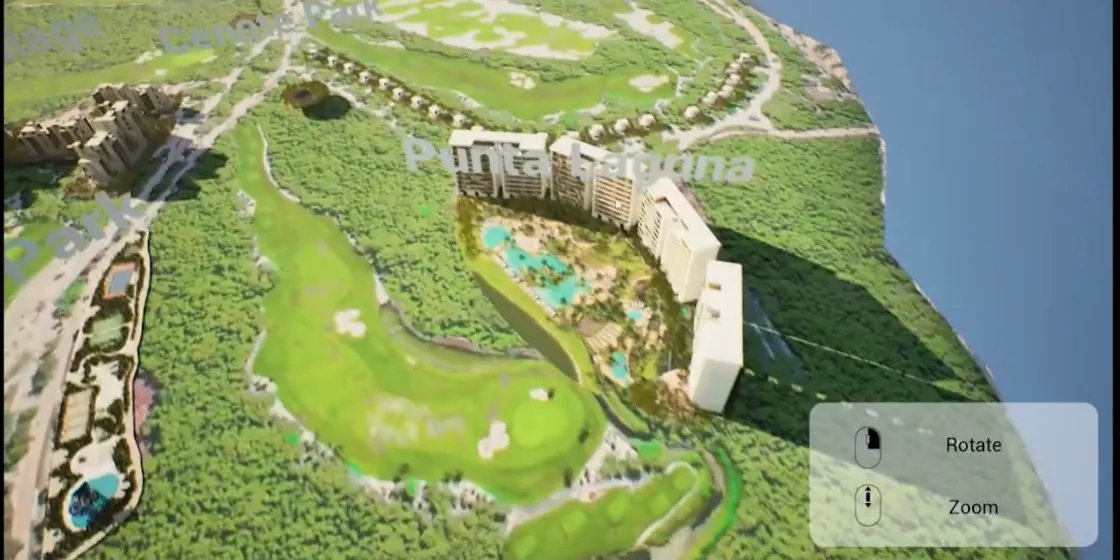
Fyware developed an interactive 3D architectural visualization built in Unreal Engine 5 and delivered via cloud streaming through Vagon. The experience lets users explore a virtual scale model of the entire development, with free camera navigation, intelligent object focus and transitions between real-time 3D, a web-based 3D viewer and augmented reality, all directly from the browser. The client is a real estate developer and is not named here by agreement.
The figures and where they come from: zero hardware to install, because the experience runs in the cloud and reaches the browser as interactive video, so no graphics card and no download are required; three delivered modes from one body of modeling; and the development sold off plan, which the client reports and Fyware did not measure. Delivered in 2025.
What was built is an interactive virtual scale model of the whole development: the entire ensemble recomputed in real time, where the buyer chooses where to go and what to look at.
How it was decided
A physical scale model does not travel, and a printed plan is not understood
The problem
Stakeholders decide without visiting the site. A physical scale model answers the question of where everything sits, but it lives in one sales room and cannot be sent; static renders travel, but they do not let anyone explore the ensemble or judge distances.
The developer's call
To model the entire development rather than unit by unit, betting that the sales conversation changes when the buyer can move over the whole thing instead of being pointed at it on a plan.
What we built
The model in Unreal Engine 5 with a custom camera system for orbit, zoom and drag, an interactive object framework with focus and unfocus behaviors, and cloud-streamed delivery so it opens on any machine.
Inside the model
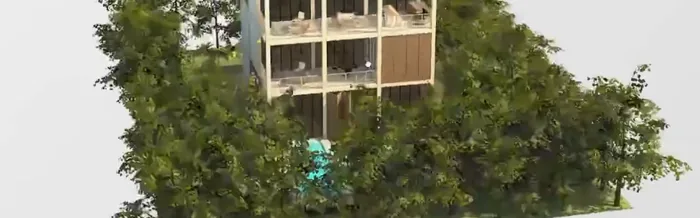
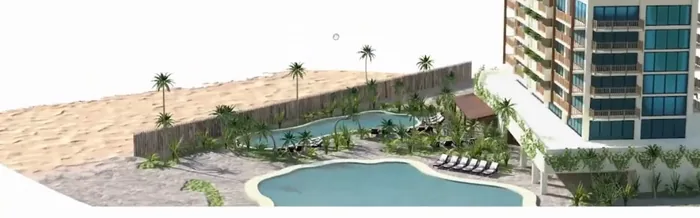
From the ensemble to the unit. Every element of the development is an object that can be focused and turned on its own.

What makes it work
Four decisions worth repeating
- The computing lives in the cloud. With streaming, what reaches the browser is interactive video, so there is no graphics card to demand and no installer to send.
- Model the whole development. In a large development the purchase decision depends on understanding where everything sits, and only the full masterplan answers that.
- Real time instead of a recorded fly-through. The buyer chooses the angle, and that is why they believe it: nobody lets you look wherever you want at something they are hiding.
- One body of modeling, three outputs. The same piece serves real time, the browser 3D viewer and augmented reality, with nothing produced twice.
The architecture, the construction and the commercial operation are the developer's. We built the virtual scale model they showed it with.
When is a real-time model worth it, and when is a tour enough?
It depends on the question the buyer walks in with. If they are choosing between two apartments in the same tower, what they need is to walk the interior, and a 360 tour covers that at a fraction of the cost. If they are deciding whether to buy into a development spread over several hectares, the question is different: where their unit sits relative to the beach, how far the amenity they care about is, and what they will see out of the window. That question is about the ensemble, and the ensemble does not fit inside a unit-by-unit tour.
A physical scale model answers that question well, which is why sales rooms still use one. Its problem is that there is exactly one, it lives in one place and it cannot be emailed. A virtual scale model keeps the advantage of the physical one, seeing the whole at a glance and being able to approach any point of it, and drops the limitation, which is having to be there.
The cost here almost always sits in the machine that opens it, more than in the modeling. A real-time model of an entire development wants a computer with a graphics card, and no buyer has one and none will buy one for you. That is why delivery is streamed: the computing moves to the cloud and interactive video arrives at the browser. It is what turns a desktop piece into a link you can send over WhatsApp.
And a note on the off-plan figure. The development sold before it was built; the client reports that, and we did not measure it. A development sells on price, location, market and timing; the model was one of the tools they showed it with. Presenting it as the cause would be exactly the kind of inflated figure we do not publish.
Project details
- Client
- Real estate developer. Not named here by agreement
- Sector
- Resort and real estate development
- Scope
- Interactive virtual scale model of the whole development
- Interaction
- Orbit, zoom and drag camera · per-object focus and unfocus · point-and-click with auto-focus
- Outputs
- Real-time 3D, in-browser 3D viewer and AR-ready models
- Platform
- Windows, cloud-streamed through Vagon
- Technologies
- Unreal Engine 5 (C++)
- Delivered
- 2025
Frequently asked questions
I want to show the whole development. How is that done?
With a virtual scale model of the entire masterplan. Here the whole development was modelled in Unreal Engine 5 and the buyer navigates freely above it: they orbit, zoom in and drop down to the building they care about, then carry on inside. The difference from a standalone tour is that you understand where everything sits, what is near what, and how a unit relates to the amenities and to the rest of the land. It is the question a printed masterplan answers badly and a physical scale model answers well, except that a physical scale model does not travel.
My buyer opens this on an office laptop. Will it work for them?
Yes, and that was the starting point of the project. The experience does not run on the buyer's machine: it runs in the cloud, streamed through Vagon, and what reaches the browser is interactive video. That is why the amount of hardware to install is zero and no graphics card or download is needed. It opens from a link, which is what makes it sendable by email or message to somebody in another city.
What do I gain from a real-time model if I already have renders and a 360 tour?
The path stops being decided in advance. A render and a 360 are captured from the points you chose; a real-time model is recomputed frame by frame, so the buyer can go wherever they like, focus a building, walk around it and compare two areas without anyone having planned that route. It costs more to produce, which is why it earns its keep when what you are selling is a large ensemble and the decision depends on understanding the ensemble.
Can the building be seen at real scale on the actual site?
Yes. The models were delivered AR-ready and open from the browser with no app to install, so the building can be placed in the real world and inspected there. Together with the web 3D viewer and the real-time version, they are three modes of the same piece: one body of modeling serves the sales room, the web and the site, with nothing produced twice.
 Tom Klukowski
Fyware Partner · Valcre Marketing
Want a result like this in your operation?
Fyware has delivered 750+ XR projects for clients like Gerdau Corsa, Cummins and Medverse, from Mexico in US Central Time. Tell us your case and we will tell you what is feasible, how long it takes and what it costs.
“They have been innovative and relentless in solving very technical issues.”
 Paul A. LiberatoreOwner/CEO, Access Flight Training Services LLCPublic review on GoodFirms, 5 stars · August 2026
We build the virtual scale model of the whole thing and open it from a link, on the machine your buyer already has.
See real estate tours 360 tour for off-plan sales
 Real Estate ToursThe full line