
360 virtual tour of a mezcal distillery
The distillery is 90 minutes away. The whole process fits in a headset.
Mezcal Patatús makes ancestral mezcal in Bocas, San Luis Potosí, 90 minutes outside the city. We built a 360 video tour covering the six stages of the process, from harvest to distillation, you navigate by touching the icons with your hand, no controllers, on a Meta Quest 3 headset. And we scanned the whole distillery by drone photogrammetry.
- Industry
- Ancestral mezcal production
- Use case
- Plant tour
- Technology
- Meta Quest 3 and WebXR in the browser
Try it here
The scanned distillery, inside this page
This is the model the drone flight produced. Spin it, move in on the oven and go around the tahona yard. There is nothing to install.
Open it full screen · or watch the full 360 tour, which runs 8 minutes
How it started
A process you have to see to believe
The challenge
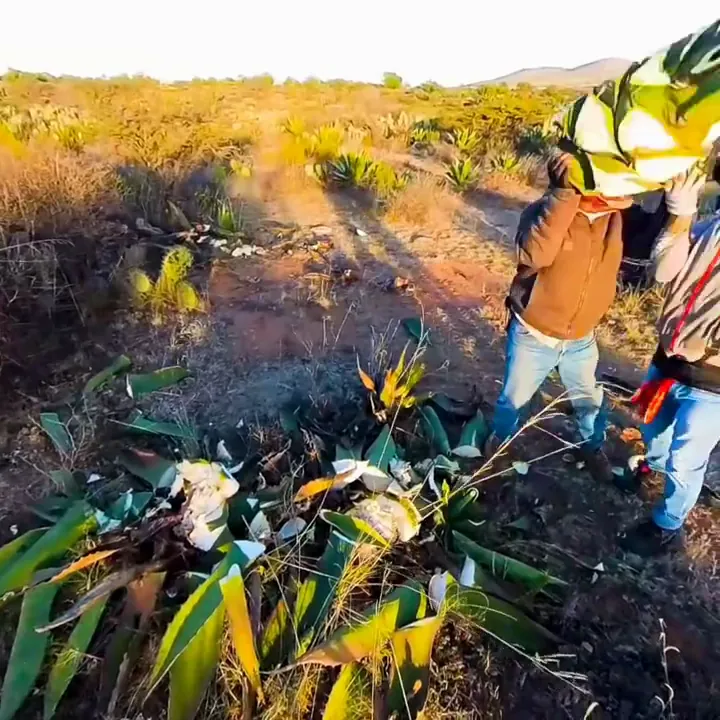
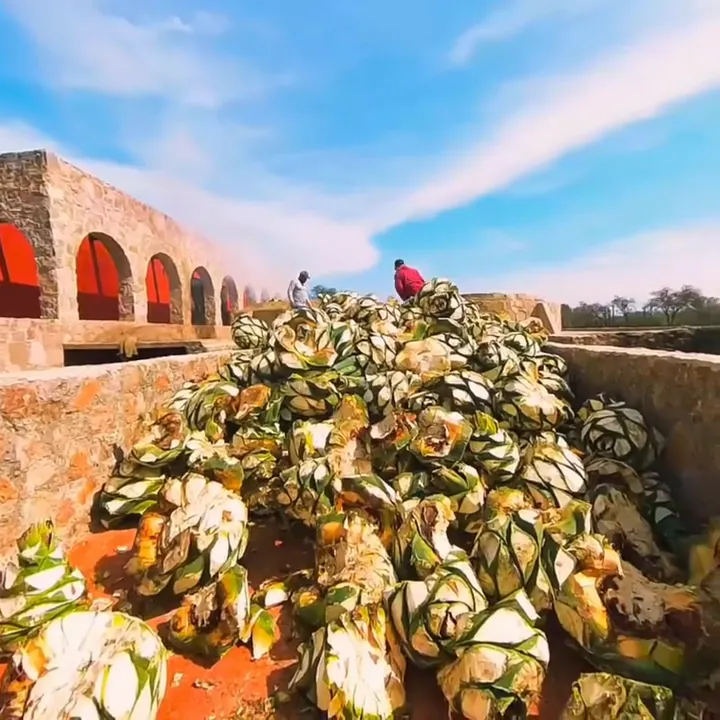
Ancestral mezcal is made by hand, and that is exactly where its value lives: the harvest with a machete, the stone oven dug into the ground, the tahona wheel turning over the roasted agave. None of that fits on a product sheet or a bottle shot. And the distillery sits in Bocas, 90 minutes from the city, so driving every client, distributor and buyer out to see it is not a realistic plan.
What Patatús brought
The process, and the judgment about what is worth showing. They defined the stages, opened the distillery to film during a real production run, and decided the story gets told end to end, from plant to glass, instead of as a pretty summary. The mezcal, the craft and the brand are theirs.
What we built
A 360 video tour of the six stages, with voice-over and a menu navigated by hand, delivered as an application on a Meta Quest 3 headset, plus two hours of training so they can run it without us. And separately, a full drone scan of the site to walk it from a browser.
Why 360 and not a regular video
A process video already exists and it is called YouTube. It works, and in fact this tour is published there too. But in a flat video someone else chose where to look: the framing is decided, the pace is decided, and the viewer gets an edited version of a place.
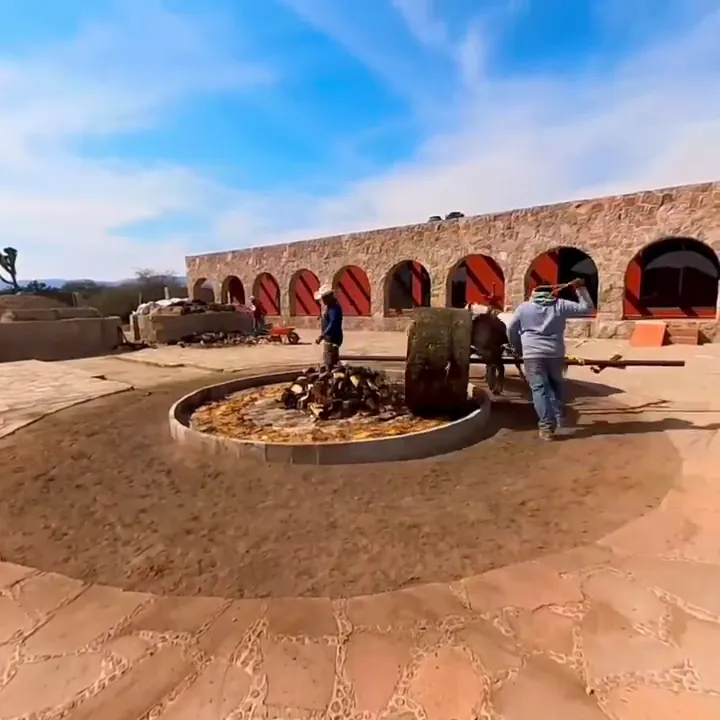
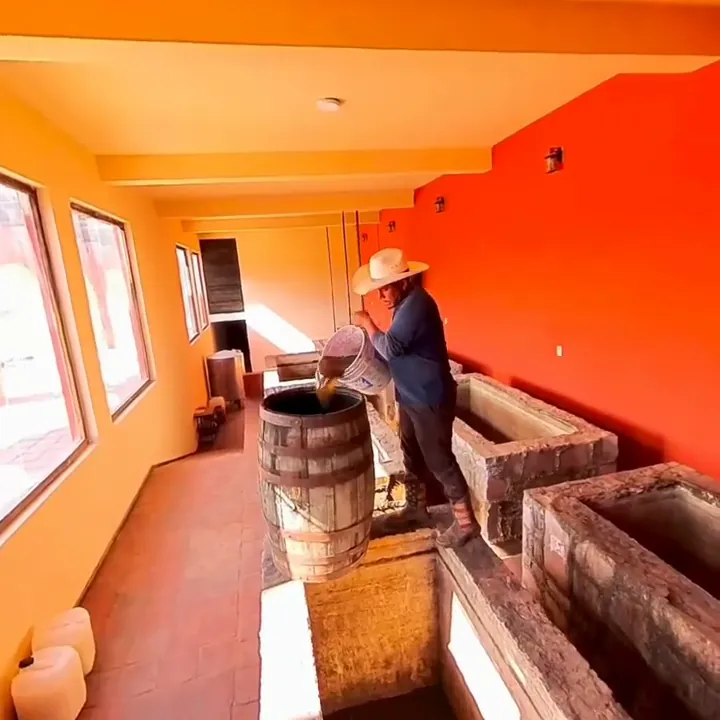
In 360 the visitor stands in the middle of the process and turns. When the jimador cuts the leaf, they can watch the blade, or they can turn around and see the agave field running all the way to the hill. When they step into the fermentation room, they take it in sideways: the wooden vats along both walls, the low ceiling, the light coming through the high windows. Being in the place is different from watching it on video, and that gap is precisely what Patatús could not get across with photographs.
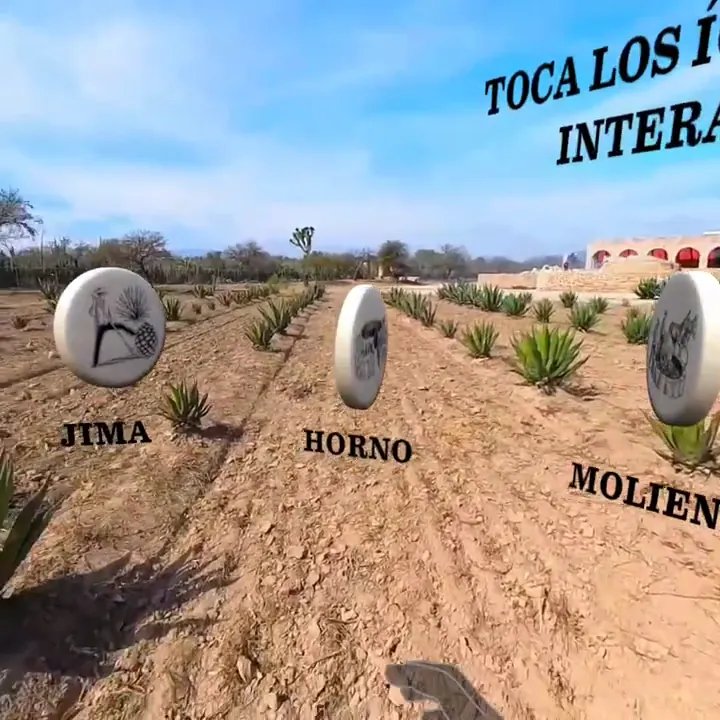
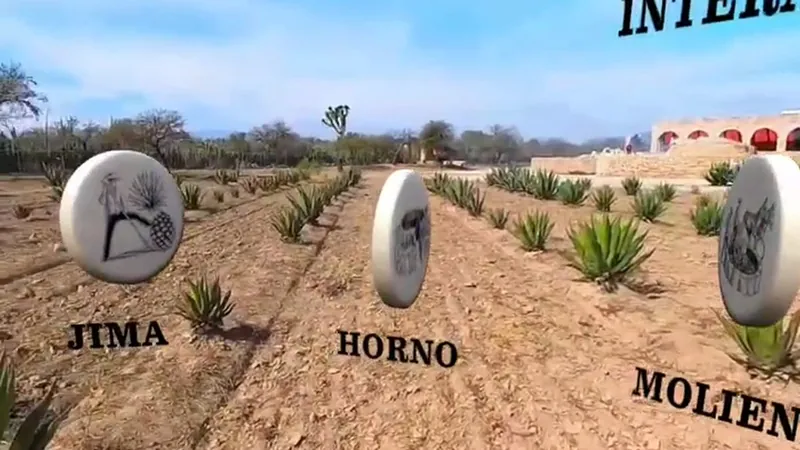
The menu is the other half. Each stage carries a voice-over explaining it, and instead of one linear eight-minute video the six float over the agave field as discs: harvest, oven, milling, fermentation and distillation, plus the overview. The visitor touches the one they care about. A distributor goes straight to distillation; someone at a trade show wants the tahona, because they have never seen one.
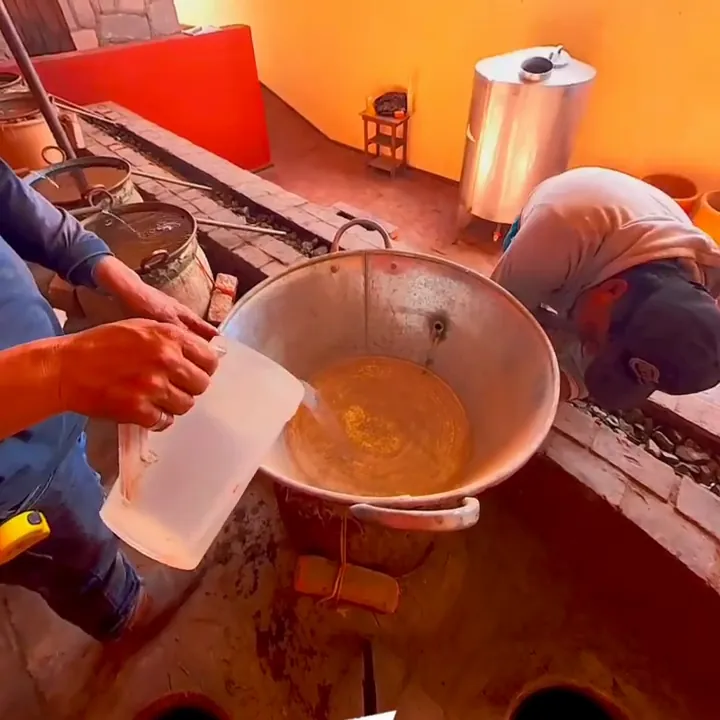
The six stages, as they look inside
You touch it with your hand, and that is not a detail
The tour uses no controllers. The visitor puts on the headset, reads “touch the icons to interact” and reaches out. The Meta Quest 3's hand tracking does the rest: nobody has to be told which button is the trigger or which stick moves what.
That matters because this product lives at trade shows, at tastings, and at a distributor's retail counter. The person putting it on has about thirty seconds of patience and has most likely never used virtual reality. Hand them two controllers and half of them spend the demo fighting the interface instead of watching the mezcal. With no controllers, the entire instruction is “touch it”.
The headset is the client's and the application is installed on it. It shipped with two hours of hands-on training, which is the part that usually gets skipped: an experience only the vendor knows how to launch is useless on the morning of the show.
And the whole site, scanned by drone
The second tool solves the opposite problem. The 360 tour is deep but it needs a headset on somebody's head; it goes far in intensity and short in reach. So the distillery was captured in full with drone photogrammetry, which rebuilds the site in three dimensions from hundreds of aerial photographs.
That model ships as a web page. It opens in any browser, spins, zooms, and lets you move around the whole property: the yard, the oven, the tahona, the buildings. Nothing to install, no headset, and a link you can send in a message. It is embedded further up this page, running. The same capture works on a plot of land or a construction site, which is how it is used in our real estate solutions.
Together the two cover the full range: the headset for when you have the person in front of you and you want them to remember, the browser for when all you have is their attention and a link.
Project details
- Client
- Mezcal Patatús, San Luis Potosí
- Where
- The distillery, in Bocas, 90 minutes from the city
- Deliverables
- A six-stage 360 video tour with voice-over, and a 3D scan of the site by drone
- Interaction
- Scene menu driven by hand tracking, no controllers
- Platform
- An application on a Meta Quest 3 headset, and WebXR in the browser for the scan
- Delivery
- Installed on the client's headset, with two hours of hands-on training
“Excellent work, on time and with good follow-up.”
What makes it work
Four decisions worth repeating
- It was filmed during real production: what you see is that day's shift.
- The tour is split into stages behind a menu, so each visitor sees what they came for.
- You navigate with your hand: the whole instruction fits in one word.
- It shipped with training, so the client's own team can launch it at the show.
The mezcal, the ancestral process and the decision about what to show belong to Mezcal Patatús. We filmed it, built both tools and handed them over working. And it is worth saying what this case does NOT claim: nobody measured how many site visits were avoided or how much the brand sold because of this. What holds up is simpler: the process can now be shown without the drive.
Frequently asked questions
How do I show my production process to someone who cannot visit the plant?
With a virtual factory tour filmed in 360 video on site. Unlike a normal video, the visitor decides where to look: they stand in the middle of the process and turn around. For Mezcal Patatús that means six stages filmed at the distillery, from harvest to the still, each with a voice-over explaining it and a menu to pick which one to watch. It runs on a virtual reality headset, which is what you take to a trade show, a sales floor or a tasting.
What does it take to film my plant or factory in 360?
A shooting day with a 360 camera at the stages worth showing, and a decision about which ones those are: not every step deserves a minute. Then editing, the voice-over, integration into the headset and a selection interface to move between scenes. On this project six stages were filmed and delivered as an application installed on the headset, plus two hours of training so the client's own team can run it without us.
Can someone walk through a plant in a browser, with no headset?
Yes, and that is the other half of this project. The distillery was scanned in full by drone photogrammetry, which rebuilds the site in three dimensions from hundreds of aerial photographs. That model is published on a page and can be rotated, zoomed and explored from a desktop or phone browser, with nothing to install and no headset. The headset gives you immersion; the browser gives you reach.
Is drone scanning useful for anything other than a factory?
Yes. And so does the 360 tour: the same setup works for a distillery, a food plant or a manufacturing line. Drone photogrammetry rebuilds in three dimensions any site you can fly over: a plot of land, a construction site in progress, an industrial building, a heritage building or an entire real estate development. The flight and the processing are the same, and only the use of the model changes. Here it lets someone see the distillery without a 90-minute drive. On a real estate development it shows construction progress and the real surroundings of a lot, which is a different use and one we cover under real estate solutions.
 Tom Klukowski
Fyware Partner · Valcre Marketing
Want a result like this in your operation?
Fyware has delivered 750+ XR projects for clients like Gerdau Corsa, Cummins and Medverse, from Mexico in US Central Time. Tell us your case and we will tell you what is feasible, how long it takes and what it costs.
Same approach, your plant: we film your stages in 360 and hand it to you running on a headset, ready for the show floor and the sales room.
See brand experiences Racing simulator
 AR catalog
 ExperiencesThe full line