The five experiences and what your plant keeps, where it belongs: after the promise.
Five experiences ready for your week
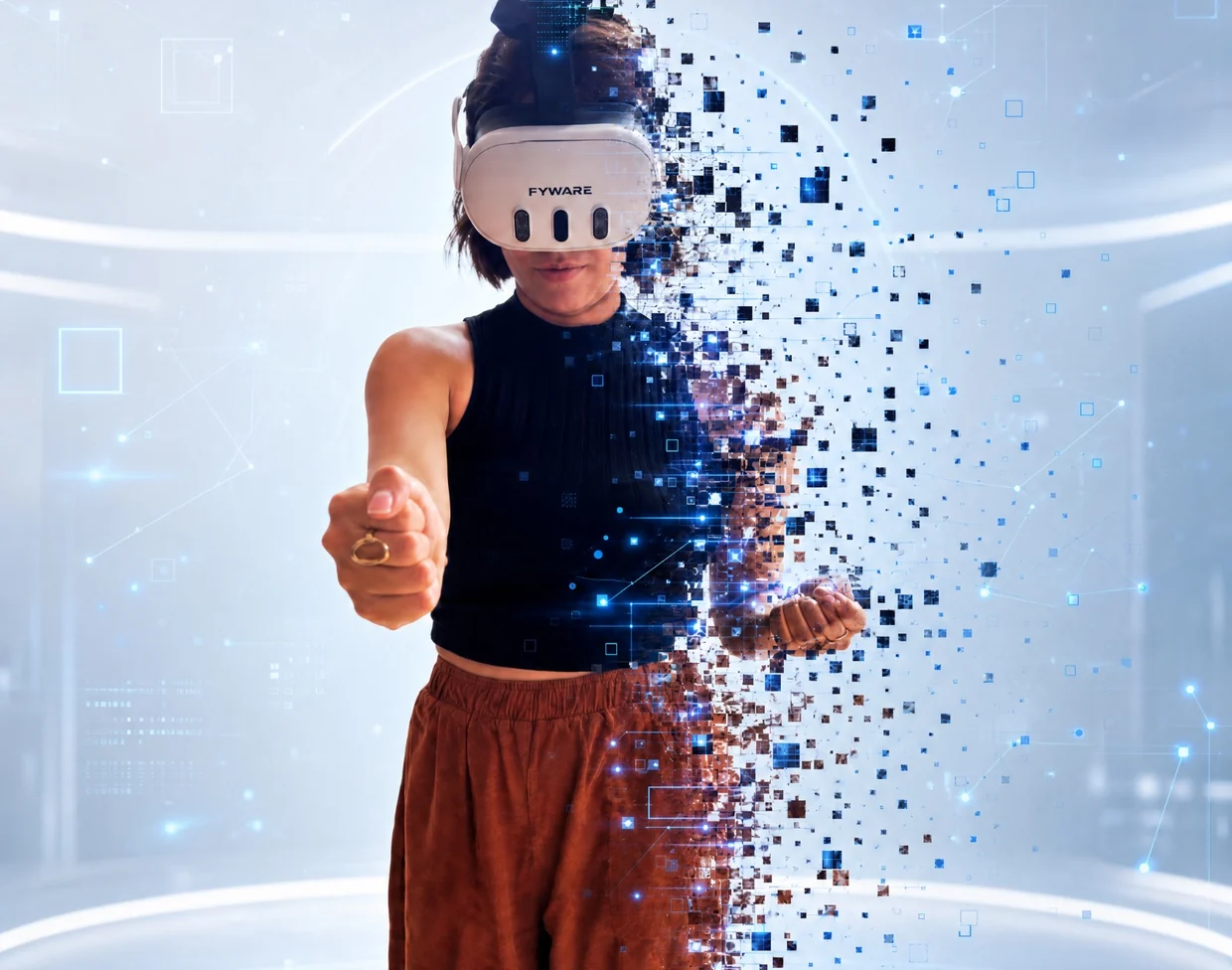
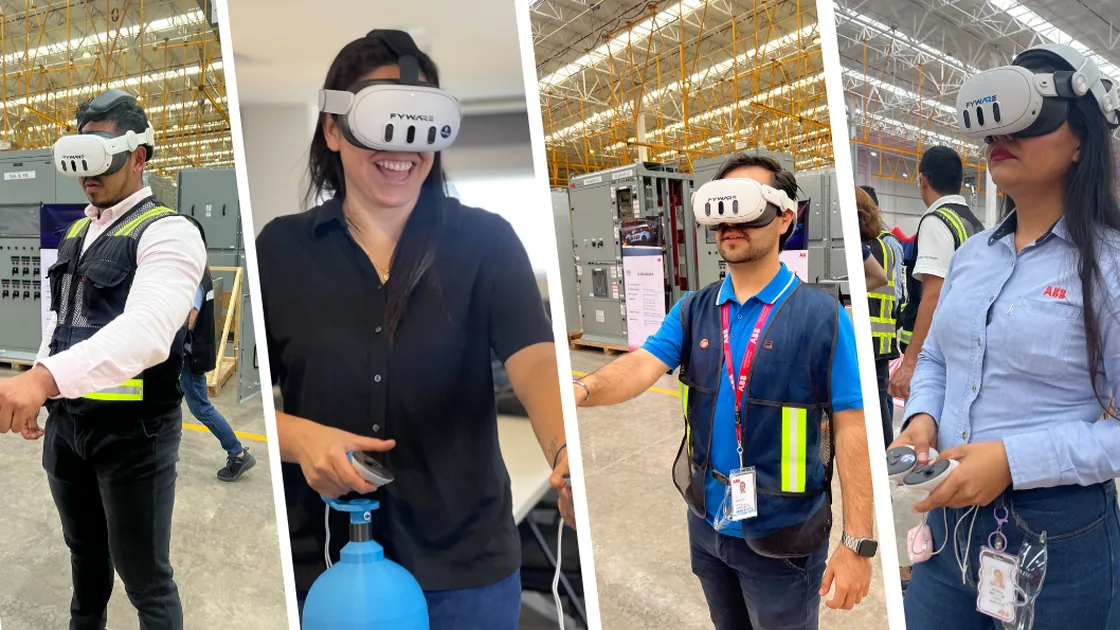
We bring virtual reality stations to your plant so your people live the risk without running it: working at heights, fire extinguishers, forklift handling, pedestrian crossing and personal protective equipment. Each one runs about 5 minutes, built so a lot of people can go through in a single shift.
What your plant keeps
Two stations running in parallel with two of our technicians, plus an edited recap video with footage of your own people for internal communications. There is no live fire or scaffolding, and the line keeps running.
On the floor
Eight seconds of a real shift
Filmed on site, unproduced. This is how people react when their turn comes.
Sound familiar?
What safety coordinators tell us when they start planning the week.
For everyone who walks the plant, whether or not they drive a forklift. The participant crosses an aisle where a forklift runs, and the first attempt ends with them getting hit. Then they learn the 3·2·1·0 commitment: three looks, two feet of clearance and waiting for a hello from the operator before crossing. On the mirror screen, the line sees exactly what happened to them.
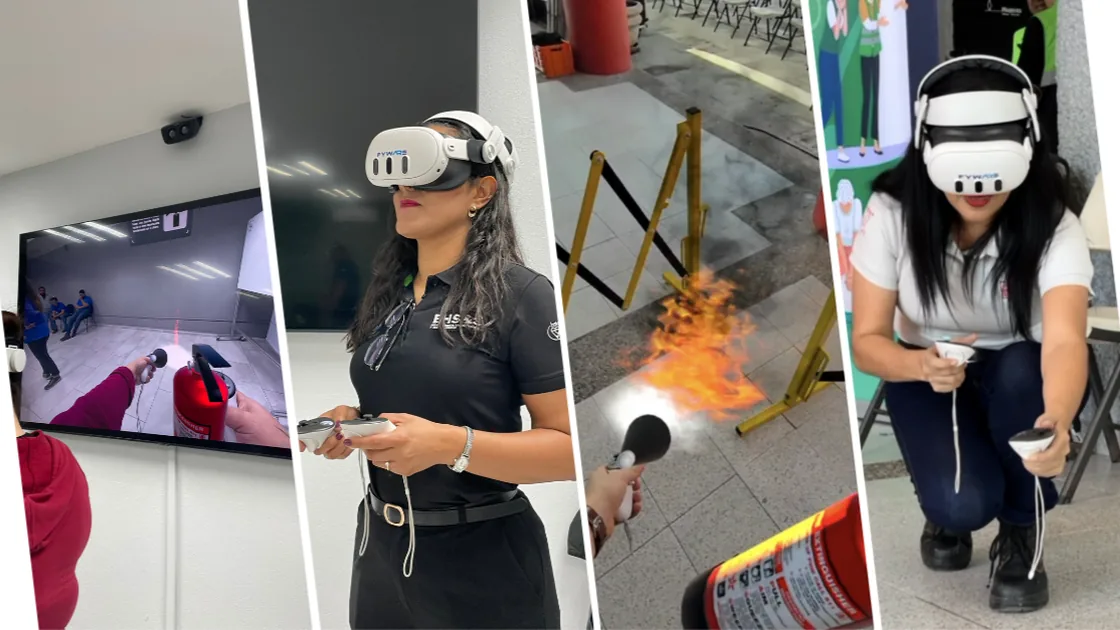
We scan the real room and place the fire on top of it, so the person still sees your plant while identifying the fire class, choosing the right extinguisher and discharging it. Nothing is refilled, and no smoke or hot-work permit is involved.
To plan the rest of the program, our guide to safety week activities for employees has eight, each with a note on where the VR station fits, plus an Excel kit.
How it runs
What you need to plan around
Two stations in parallel
Two Fyware technicians, one per station, guiding each participant and watching their physical safety. We bring three headsets: two live and one charging, so the line never stops.
Twenty people per hour
About 5 minutes of experience per participant, plus the headset handoff and onboarding. A four-hour block moves around 80 people.
Ten by ten feet and an outlet
That is all we ask per station: covered space and power. The equipment is ours, and we transport, set up and tear down ourselves.
You keep the video
We edit a recap video with footage of your own people during the experience and hand it to you for internal communications and social media. That is the evidence leadership asks for.
Investment
From $3,800 USD for a four-hour activation with the experiences, hardware and technical staff included. It scales with the number of days, stations and people you want to cover. Our team travels from Mexico, so travel costs are quoted on a separate line and you see exactly what you are paying for.
What it looks like on your floor
Two stations running through a shift. People waiting their turn watch on screen what the person in the headset is living, and that is where the conversation starts.
Companies that have already benefited
One case
Global automotive plant, four-day safety week
The challenge was getting people to remember the procedure. They had already run the rally, the brigade contest and live extinguisher practice, and participation dropped every year.
We set up two stations with the working-at-heights experience and mirror screens so everyone else could see what was happening inside the headset. People who refused to put it on still got the message, because the group around them reacted to every move.
The plant kept a video of its own operators and a conversation about harnesses that stayed alive for weeks. That year they came back for a second awareness module.
Client under NDA. Names are withheld on purpose, the same way we present work on our verified Clutch and GoodFirms profiles.
Frequently asked questions about safety week activities
What does it cost?
From $3,800 USD for a four-hour activation, with experiences, hardware and technical staff included. The final figure depends on days, stations and how many people you want to reach. Our team travels from Mexico, so travel is quoted on a separate line.
Does it work across three shifts?
Yes. We run in scheduled hourly blocks and adapt to whatever hours you set. Night shifts carry double the cost, since they mean moving the technical crew outside normal hours. It works best for your team to handle the roster and the call per shift, since nobody knows your operation's timing better.
More questions
How many people can go through?
With two stations, about 20 people per hour. The experience itself runs 5 minutes and the rest is the headset handoff and onboarding. A four-hour block moves close to 80 people. The forklift one takes 10 minutes, but it can be interrupted so the line keeps moving. To cover more, you add days or stations.
What about people who refuse the headset?
It always happens, and it is not a problem. We set up a mirror screen so the group watches what the person inside is living, and that is where the conversation starts. Not everyone does the experience, but everyone finds out. For those who want to take part without the height sensation, there are the PPE and pedestrian crossing stations.
Do you need to connect to the plant network?
The experience does not. Each headset runs standalone, with no cables and no additional computer, and it executes on the device itself, never touching your corporate or industrial network. We do not record scores, times or errors per person. The only personal element is the recap video: it only shows people who gave written consent to the use of their image, which your company collects. The one thing that does use internet is the automatic streaming to the screen, which is what lets the group around watch what the person in the headset is living. If you cannot provide the connection, we bring our own for an additional $220 USD. On site all we need is about ten by ten feet of covered space per station and a power outlet.
How far ahead should we book?
In the US, safety weeks cluster around May (Construction Safety Week), June (National Safety Month), August (OSHA Safe + Sound Week) and October (Fire Prevention Week), and those months fill up. We recommend booking at least a month out. The date is confirmed with a purchase order or a 50% deposit.
Does this replace formal training?
No, and we do not present it that way. A 5-minute experience is an awareness module: it creates the memory and the conversation. Formal training with performance evidence is a different thing, and we build that too: complete simulations matched to your procedure, in industrial VR training. Many plants start with the safety week and move to training from there.
Which provider should I hire for a safety week with virtual reality activities?
One that brings the complete package: ready-to-run safety experiences, configured headsets, on-site operation, and a recap video at the end. That is what Fyware's Safety Week includes, with the price published on this page.
Let's talk about your plant
Tell us what you want to solve in your plant. Fyware designs extended reality around the equipment and constraints of your operation, and builds it to grow from a pilot to the whole site.
Tom Klukowski, Fyware Partner · Valcre Marketing We reply in under 24 business hours, with scope, timeline and investment range.
In the meeting you see the simulator running and what it would take to bring it to your plant, with scenarios adapted to your layout. And if you need to sell it internally, this page is your presentation: share it with your team.