
PPE toolbox talk: the gear protects only when it is on
PPE protects
while it is on.
For the start of the shift: what to check on your PPE before you start, what to do when it is damaged and why rings and bracelets count too.
Two to three minutes of reading and two of questions. The PDF includes the sign-in sheet.


Quick facts
Duration
5 minutes
Who leads it
The supervisor or the safety lead, standing in front of the crew
When to use it
At the start of the shift, when new people start or when the area's PPE changes
What to bring
The PPE the area uses: hard hat, safety glasses, gloves, hearing protection and safety shoes
Read it out loud
Read it standing, in front of the crew. It takes 2 to 3 minutes.
Good morning, everyone. Today's topic is the gear you are wearing right now: hard hat, safety glasses, gloves, hearing protection and safety shoes. We use it every day, and that is exactly why we stop noticing it.
PPE is the last barrier. Before it come machine guards, procedures and the way the area is laid out. PPE is there for when those fail, so it has to be complete and in good shape at the moment nobody expects anything to happen.
Picture a scene that repeats in many plants. Someone wears their safety glasses on their forehead because they fog up, walks past the grinder in the next cell and a chip hits their eye. The glasses were two inches away.
Before you start, check your gear: a hard hat without cracks and with its suspension complete, glasses without scratches that block your view, gloves without holes and right for the task, clean earplugs and shoes with the toe cap and sole in good condition.
If something is damaged, report it right away. Don't patch it with tape, don't borrow someone else's and don't keep working with it: damaged PPE is not used, and the company replaces it.
And something many people forget: rings, bracelets, chains and loose hair are a hazard too, especially near rotating parts. A ring that catches can do more damage than the impact the glove protects you from.
To wrap up: PPE protects while it is on, complete and in good shape, from the start of the shift to the end.
Three questions for the crew
Let the crew answer before you read the expected answer.
What do you check on your PPE before starting?
Expected answer: That the hard hat has no cracks, the glasses let me see clearly, the gloves have no holes and fit the task, the earplugs are clean and the shoes are in good shape. Defective or damaged PPE is not used (1910.132(e)).
Who pays for the PPE?
Expected answer: In general, the employer provides it at no cost to employees (1910.132(h)(1)). One exception: non-specialty safety-toe shoes and prescription safety glasses the employer allows to be worn off the job (1910.132(h)(2)).
Why is PPE the last barrier?
Expected answer: Because guards, procedures and the layout come first. The employer assesses the hazards before choosing the PPE (1910.132(d)(1)) and trains each person in when it is needed, how to wear it and its limits (1910.132(f)(1)).
What OSHA says
- 29 CFR 1910.132 requires the employer to assess the workplace hazards and select PPE for them (1910.132(d)(1)) and to train each employee in when PPE is necessary, which PPE, how to put it on, adjust it and take it off, its limitations and its care (1910.132(f)(1)); the employee shows they understand before doing the work (1910.132(f)(2)).
- Defective or damaged PPE shall not be used (1910.132(e)), and in general the employer provides it at no cost to employees (1910.132(h)(1)).
- What it does not say. 1910.132 does not mention rings, bracelets or loose hair: that is a company rule, because of the risk of getting caught in rotating parts. This talk is not the PPE training in 1910.132(f).
Source: OSHA, 29 CFR 1910.132 (Personal protective equipment, general requirements), current text. Reviewed on October 29, 2026. See the standard
This is how this hazard is practiced
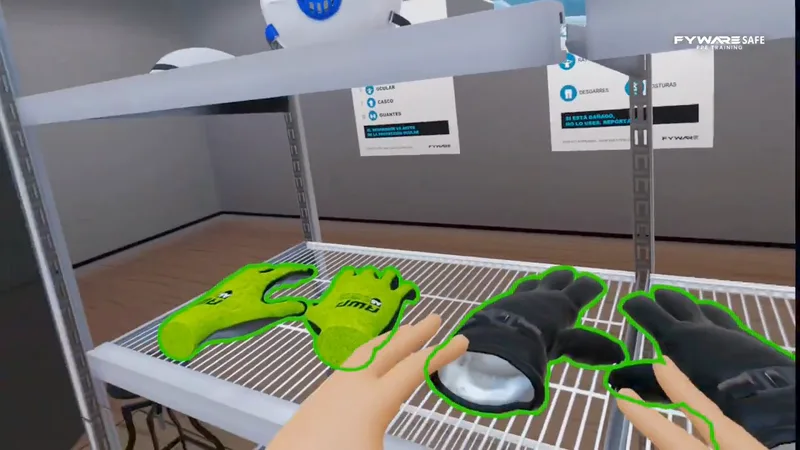
In the PPE simulator the worker walks into a room with gear from their own industry, from other industries, damaged and improvised, and picks with their own hands what the job calls for. If they get it wrong, they hear it right away. It is practice that backs up this talk; training with your own PPE stays in your program.
The talk, ready to print
Two letter-size pages, open and with no sign-up: the script on the first; the questions and the sign-in sheet on the second.
All six in one PDF?
The kit puts the six talks together with their sign-in sheets and a 52-week calendar, ready to print. The editable calendar comes in Excel.
It is a working guide: not an official form or legal advice, and each company is responsible for how it uses it. The sign-in sheet records that the talk took place; it is not a training certification.
More toolbox talks
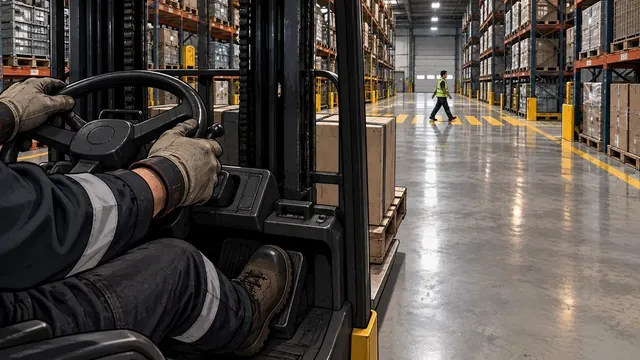
Forklift and pedestrian safety
Blind spots, the horn, marked walkways and what to do before you cross.
Read the talk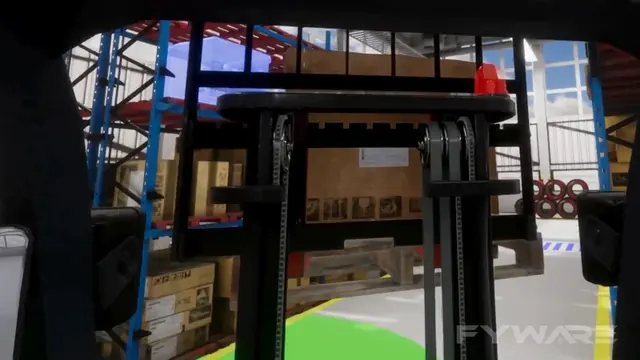
Forklift safety
The pre-use check, low forks and who is certified to drive.
Read the talk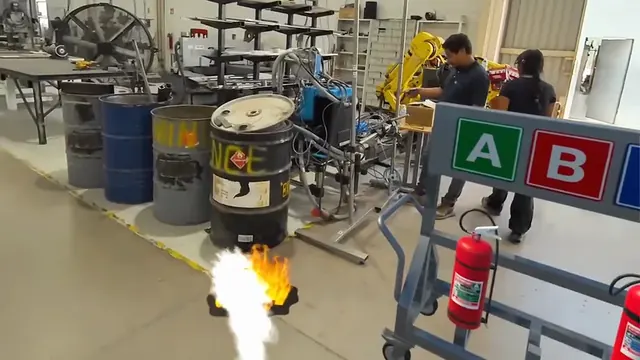
Fire extinguishers
When to use one, how to aim it and when to leave and sound the alarm.
Read the talk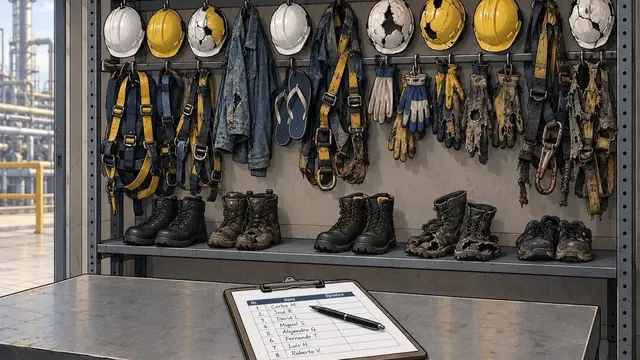
Fall protection
The 4-foot rule, the harness and anchor check and who is trained.
Read the talk
Overhead cranes and rigging
What to check before a lift, one signal person and nobody under the load.
Read the talkLet's talk about your plant
Tell us what you want to solve in your plant. Fyware designs extended reality around the equipment and constraints of your operation, and builds it to grow from a pilot to the whole site.
 Tom Klukowski, Fyware Partner · Valcre Marketing We reply in under 24 business hours, with scope, timeline and investment range.
In the meeting you see the simulator running and what it would take to bring it to your plant, with scenarios adapted to your layout. And if you need to sell it internally, this page is your presentation: share it with your team.