
Forklift pedestrian safety toolbox talk: who crosses the aisle
The operator doesn't see
what you see.
For the start of the shift: blind spots, the horn, marked walkways and what to do before you step into the aisle.
Two to three minutes of reading and two of questions. The PDF includes the sign-in sheet.


Quick facts
Duration
5 minutes
Who leads it
The supervisor or the safety lead, standing in front of the crew
When to use it
At the start of the shift, when forklifts and people on foot share the area or after the layout changes
What to bring
A map of the area's marked walkways and, if possible, a parked forklift
Read it out loud
Read it standing, in front of the crew. It takes 2 to 3 minutes.
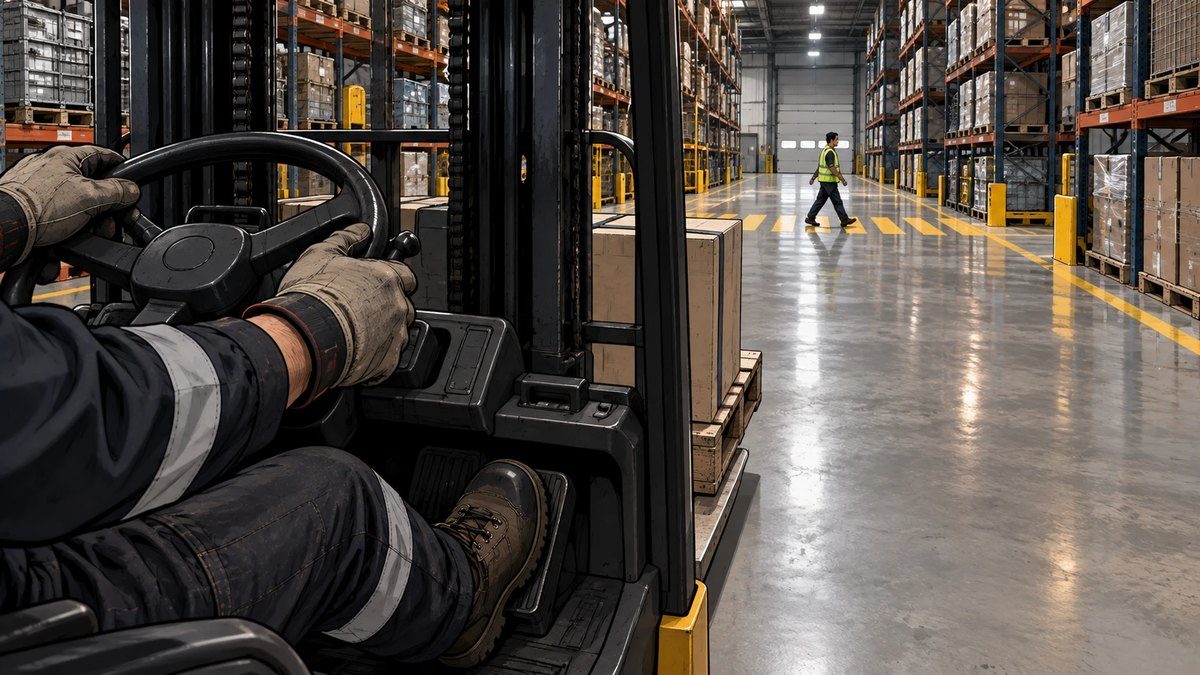
Good morning, everyone. Today's topic is a crossing that happens hundreds of times a shift: a forklift on one side, people on foot on the other.
The operator sees less than you think. A raised load blocks the front, the mast cuts the view and, in reverse, the operator looks over one shoulder. There are blind spots on both sides of the truck.
Picture a common scene. Someone leaves the break room reading their phone, steps into the aisle from behind a rack and walks right into a forklift backing up. The operator sounded the horn, but the person had earbuds in.
If you are on foot: use the marked walkways, stop before you cross, look both ways and make eye contact with the operator. If the operator hasn't seen you, you don't cross.
If you are driving: slow down and sound the horn at cross aisles and blind corners, keep your speed down where people walk and, if the load blocks your view, travel with the load trailing or ask for a spotter.
Nobody walks next to a moving forklift, stands or passes under raised forks or rides on the forks. And a walkway blocked by a pallet gets reported right away.
To wrap up: in the aisle, the person on foot always loses. Checking that the operator saw you takes three seconds.
Three questions for the crew
Let the crew answer before you read the expected answer.
What do you do before crossing an aisle where forklifts run?
Expected answer: Stop before the crossing, look both ways and make eye contact with the operator. If the operator hasn't seen me, I wait. Drivers must slow down and sound the horn at cross aisles (1910.178(n)(4)).
Why does the operator sometimes not see people on foot?
Expected answer: Because the load, the mast and driving in reverse create blind spots. That is why the driver travels with the load trailing when it blocks the forward view (1910.178(n)(4)) and looks in the direction of travel (1910.178(n)(6)).
Where is nobody allowed to stand?
Expected answer: Under the raised forks, loaded or empty (1910.178(m)(2)), or between a truck and a bench or wall it is driving toward (1910.178(m)(1)). And nobody rides a forklift without a safe place to ride (1910.178(m)(3)).
What OSHA says
- 29 CFR 1910.178 requires the driver to slow down and sound the horn at cross aisles and wherever vision is obstructed, to travel with the load trailing when it blocks the forward view (1910.178(n)(4)) and to look in the direction of travel (1910.178(n)(6)).
- No one may stand or pass under the elevated portion of a truck, loaded or empty (1910.178(m)(2)), and unauthorized riders are not allowed (1910.178(m)(3)). Where forklifts are used, aisles need safe clearances, are kept clear and, when permanent, are marked (1910.176(a)).
- What it does not say. OSHA does not set an aisle width or a single rule for separating people on foot from forklifts: walkways, one-way routes and plant speed limits are your company's call, based on its own hazard assessment. This talk is not operator training.
Source: OSHA, 29 CFR 1910.178 (Powered industrial trucks) and 1910.176 (Handling materials, general), current text. Reviewed on October 29, 2026. See the standard
This is how this hazard is practiced
The pedestrian forklift safety simulator puts people on the walking side: the first crossing ends with them hit, and then they practice the 3·2·1·0 commitment, three looks the headset verifies, two feet of clearance and a hello from the operator before stepping into the aisle. The forklift simulator puts the operator in front of someone who runs across. Both add practice; training and certification stay in your program.
The talk, ready to print
Two letter-size pages, open and with no sign-up: the script on the first; the questions and the sign-in sheet on the second.
All six in one PDF?
The kit puts the six talks together with their sign-in sheets and a 52-week calendar, ready to print. The editable calendar comes in Excel.
It is a working guide: not an official form or legal advice, and each company is responsible for how it uses it. The sign-in sheet records that the talk took place; it is not a training certification.
More toolbox talks
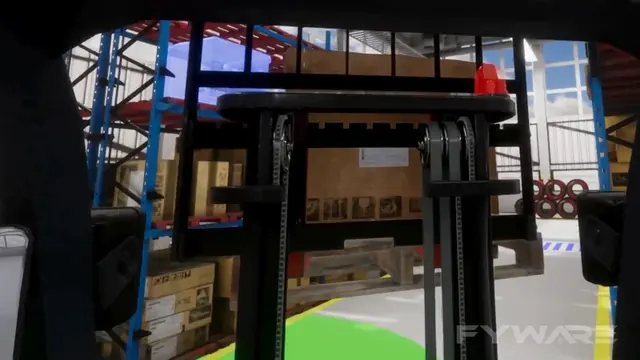
Forklift safety
The pre-use check, low forks and who is certified to drive.
Read the talk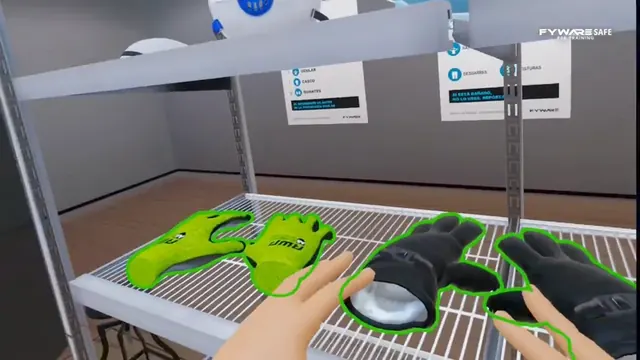
PPE
What to check before you start, what to do when it is damaged and jewelry.
Read the talk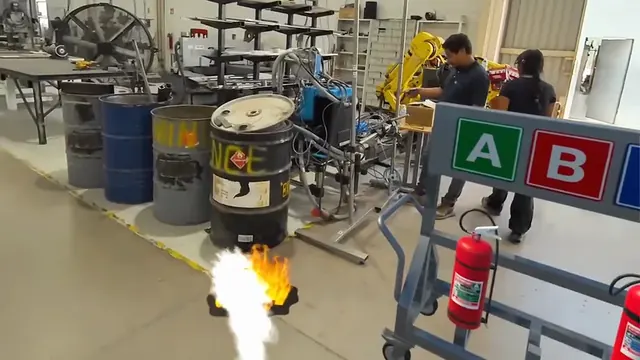
Fire extinguishers
When to use one, how to aim it and when to leave and sound the alarm.
Read the talk
Fall protection
The 4-foot rule, the harness and anchor check and who is trained.
Read the talk
Overhead cranes and rigging
What to check before a lift, one signal person and nobody under the load.
Read the talkLet's talk about your plant
Tell us what you want to solve in your plant. Fyware designs extended reality around the equipment and constraints of your operation, and builds it to grow from a pilot to the whole site.
 Tom Klukowski, Fyware Partner · Valcre Marketing We reply in under 24 business hours, with scope, timeline and investment range.
In the meeting you see the simulator running and what it would take to bring it to your plant, with scenarios adapted to your layout. And if you need to sell it internally, this page is your presentation: share it with your team.