
Fall protection toolbox talk: at 4 feet, no shortcuts
At 4 feet,
no shortcuts.
For the start of the shift: when an edge needs fall protection, what to check on the harness and the anchor, and who is trained to use it.
Two to three minutes of reading and two of questions. The PDF includes the sign-in sheet.


Quick facts
Duration
5 minutes
Who leads it
The supervisor or the safety lead, before the task
When to use it
At the start of a shift with work at height, or when the work area changes
What to bring
A full-body harness, a lanyard and the task's job hazard analysis
Read it out loud
Read it standing, in front of the crew. It takes 2 to 3 minutes.
Good morning, everyone. Today's topic is falls, and it starts with a number: in general industry, OSHA requires fall protection when a walking-working surface has an unprotected side or edge 4 feet or more above a lower level.
That includes a mezzanine without guardrails, an open-sided platform on the line or a maintenance catwalk. It doesn't matter if the job takes two minutes.
Picture a scene that repeats. One bolt is missing to finish the job, the harness was left down below and someone decides to go up for just a minute without tying off. A fall doesn't wait for the minute to be over.
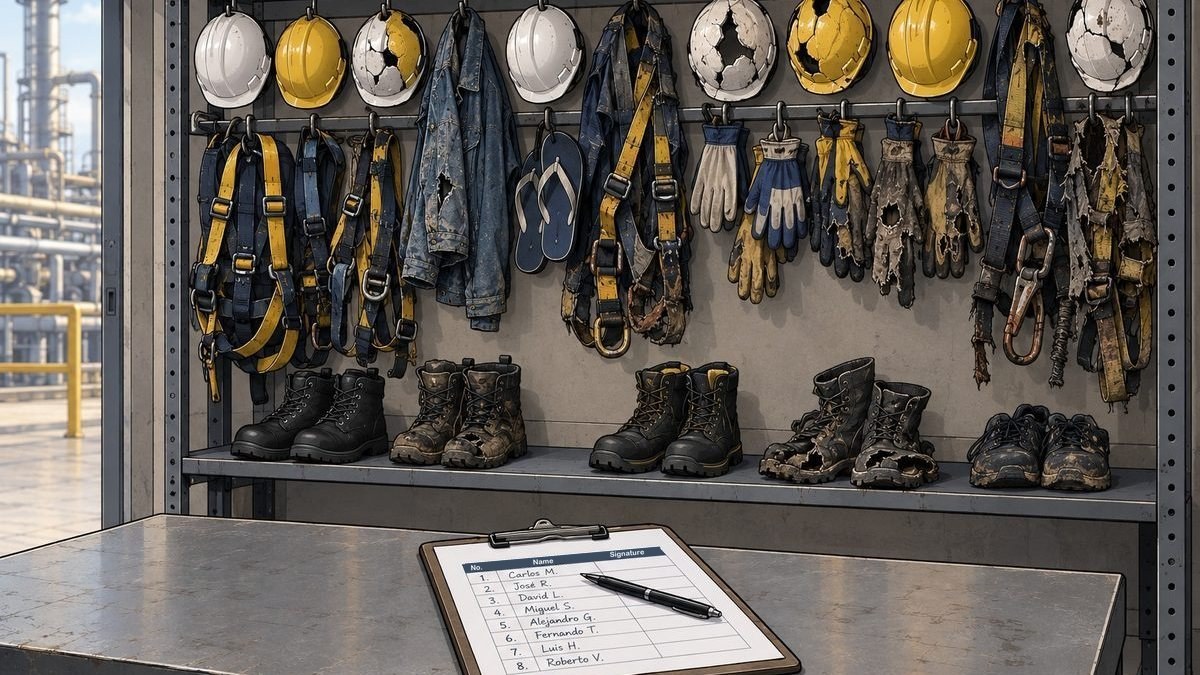
Before you go up, check your harness, its stitching, buckles and lanyard, and confirm that the anchor point was chosen for this and that the task was reviewed. Anything damaged comes out of service.
Anyone who uses a personal fall protection system is trained before being exposed, by a qualified person. Without that training, you stay on the ground.
There is work below too: barricade the area, don't leave loose tools up top and don't walk under someone who is working.
To wrap up: if conditions change, if there is no anchor or if something looks wrong, stop and tell your supervisor before you continue.
Three questions for the crew
Let the crew answer before you read the expected answer.
At what height does OSHA require fall protection in general industry?
Expected answer: At 4 feet (1.2 m) or more above a lower level, on any walking-working surface with an unprotected side or edge (1910.28(b)(1)(i)).
What do you check on your harness before using it?
Expected answer: Stitching, webbing, buckles, D-rings and lanyard, looking for wear, damage, mildew or deterioration. Personal fall protection systems are inspected before initial use during each workshift, and defective components are removed from service (1910.140(c)(18)).
Who can work with a personal fall protection system?
Expected answer: Someone trained by a qualified person before being exposed to the fall hazard (1910.30(a)(1) and (a)(2)), and retrained when the workplace or the equipment changes (1910.30(c)).
What OSHA says
- 29 CFR 1910.28(b)(1)(i) requires protection for each employee on a walking-working surface with an unprotected side or edge 4 feet (1.2 m) or more above a lower level.
- Before any employee is exposed to a fall hazard, the employer provides training (1910.30(a)(1)) given by a qualified person (1910.30(a)(2)). Personal fall protection systems are inspected before initial use during each workshift (1910.140(c)(18)).
- What it does not say. The 4-foot threshold is general industry (29 CFR 1910); construction has its own rules in Part 1926, and fixed ladders, scaffolds and roofs have specific ones. This talk does not replace the training in 1910.30.
Source: OSHA, 29 CFR 1910.28 (Duty to have fall protection), 1910.30 (Training requirements) and 1910.140 (Personal fall protection systems), current text. Reviewed on October 29, 2026. See the standard
This is how this hazard is practiced
In the working at heights experience of the Safety Week activities, a person climbs a virtual platform five meters up, about 16 feet, and is asked to repair a light fixture: they feel the vertigo with their feet on the floor. It builds awareness; the fall protection training in 1910.30 stays in your program.
The talk, ready to print
Two letter-size pages, open and with no sign-up: the script on the first; the questions and the sign-in sheet on the second.
All six in one PDF?
The kit puts the six talks together with their sign-in sheets and a 52-week calendar, ready to print. The editable calendar comes in Excel.
It is a working guide: not an official form or legal advice, and each company is responsible for how it uses it. The sign-in sheet records that the talk took place; it is not a training certification.
More toolbox talks
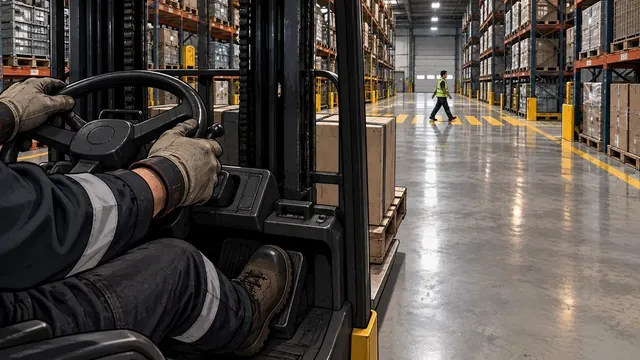
Forklift and pedestrian safety
Blind spots, the horn, marked walkways and what to do before you cross.
Read the talk
Forklift safety
The pre-use check, low forks and who is certified to drive.
Read the talk
PPE
What to check before you start, what to do when it is damaged and jewelry.
Read the talk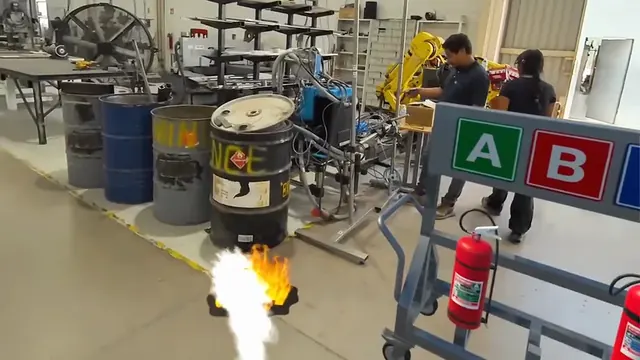
Fire extinguishers
When to use one, how to aim it and when to leave and sound the alarm.
Read the talk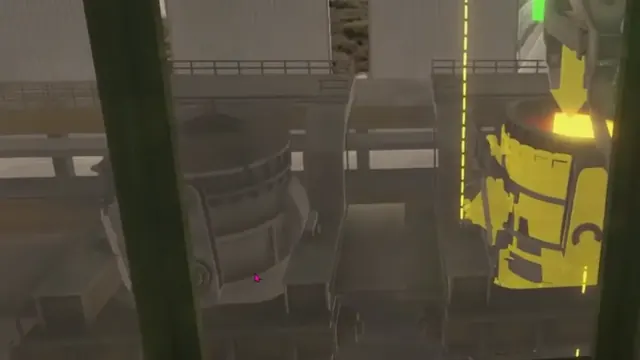
Overhead cranes and rigging
What to check before a lift, one signal person and nobody under the load.
Read the talkLet's talk about your plant
Tell us what you want to solve in your plant. Fyware designs extended reality around the equipment and constraints of your operation, and builds it to grow from a pilot to the whole site.
 Tom Klukowski, Fyware Partner · Valcre Marketing We reply in under 24 business hours, with scope, timeline and investment range.
In the meeting you see the simulator running and what it would take to bring it to your plant, with scenarios adapted to your layout. And if you need to sell it internally, this page is your presentation: share it with your team.