
What you leave unspent in December gets cut in January
 By Olga Chávez, Sales Manager at Fyware · LinkedIn
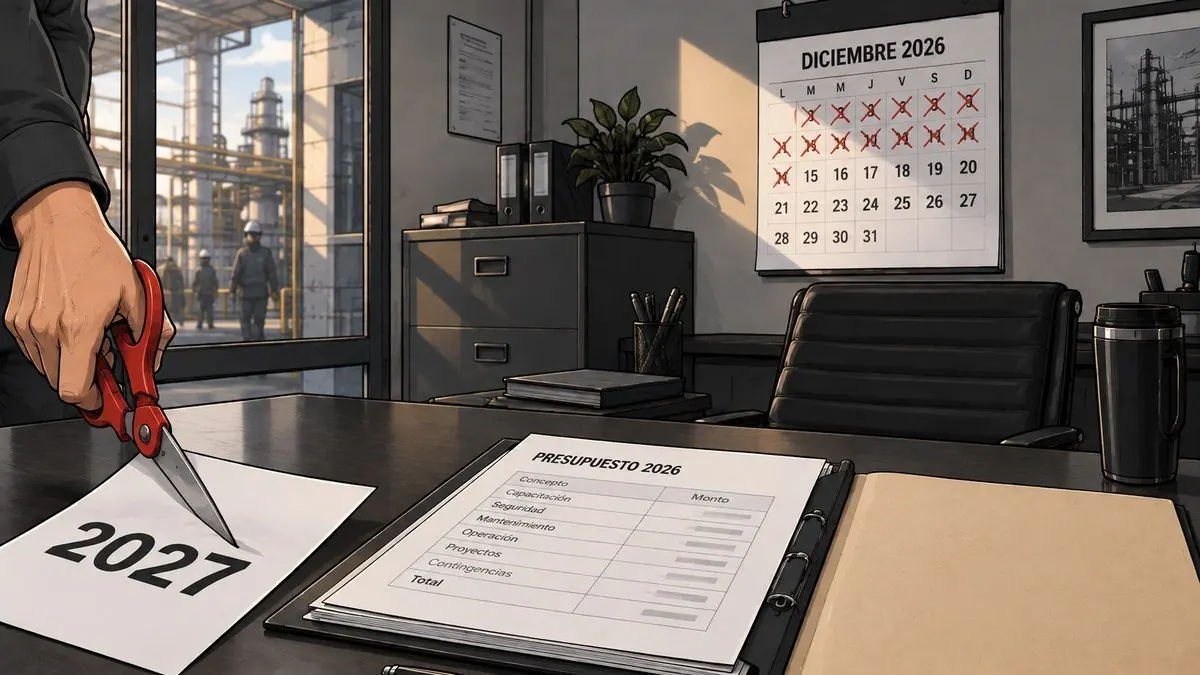
The short answer: a training budget 2026 that reaches December unspent becomes the argument for cutting your 2027 number. It can still be committed, but not everything the same way: what you buy happens this year, and what gets built is ordered this year and delivered in the first quarter.
Every October I have the same call. A training or safety manager looks at the budget, sees money still sitting there, and is not happy about it. They already know what January looks like when December ended with money left.
Nobody thanks you for saving
They cut you. Finance reads the leftover as a sign that too much was approved. If you were given a hundred and spent sixty, the planning meeting concludes that sixty is enough, and sixty is what next year brings.
So an unspent budget is the evidence someone will use against you in that meeting. The only defense is that the money ends up in something you can show.
Two paths, and both spend the training budget 2026
Ten weeks from the close not everything fits, and most people get it wrong by assuming that whatever is not delivered in December does not count.
- What you buy happens this year. A training session for your safety week, or a module for one specific risk, gets scheduled, delivered and invoiced before the close. It is the step a plant manager approves out of their own budget, without going up to the executive team.
- What gets built is ordered this year. A simulator of your own process is not finished in ten weeks, because we have to walk your floor, model your area and test it with your people. But the purchase order and the deposit land in 2026, and delivery falls in the first quarter. How your company books that deposit is one question for procurement, and in many of them this is the ordinary route for projects that do not fit into the weeks that are left.
What does not fit is the usual thing: starting to think about it in December.
The obligations nobody put on a calendar
Here is the argument that does not depend on whether you want to buy anything. Several training obligations came due this year and nothing flagged them, because most of them are triggered by change rather than by an annual date.
OSHA 1910.132(f)(2) requires every affected employee to demonstrate they understand the training and can use the equipment properly before being allowed to do the work, and paragraph (f)(3) triggers retraining when the workplace changes, when the PPE changes, or when what someone does with the equipment shows the skill is gone. Every person who joined your plant in 2026, every new line, every piece of equipment you swapped out, created one of those triggers. My colleague Amparo covers what that looks like in practice in hands-on PPE training.
Spending what is left on an obligation that already came due is closing an open item with the money that was meant for exactly that.
December 31 is not the date
That is the calendar's date. The operation runs on other dates.
- Your fiscal year, if it does not end in December. Plenty of US companies close in June or September. Everything below counts backwards from that close.
- Your company's purchasing cutoff. In many companies finance stops taking orders in late November. Ask this week, because that date is your real year end.
- The second week of December. After that, in practice, nobody signs anything even if the calendar says two weeks are left.
- Peak production. In manufacturing, November to January is peak, so whatever is going to be delivered this year gets scheduled now, well before the last working week.
- How long a quote with a defined scope takes. If the vendor has to start by understanding your process, the clock on the quote runs before the clock on the purchase.
Count backwards from your purchasing cutoff and you will see that October is the last comfortable month.
The 2027 budget is defended with a result
Not with an argument. A project paid for in 2026 with a measurable number, even if it is delivered in March, is what turns "did not spend it all" into "invested, and here is what came back". What each step costs is in how much VR training costs, so you walk into that conversation with the number.
And if what is left is small, there is an honest way out: spend it on the diagnosis and the scope definition, and charge delivery to the new budget. It does not pull the delivery forward, but January starts with the project already moving, and what was left over turned into work instead of a justification.
If January cuts what you did not spend today, what are you going to train the 2027 new hires with?
Frequently asked questions
What happens to training budget that is not spent during the year?
In most companies it is lost, and it is read as a sign that you had been given too much, so the following year usually arrives cut.
Can a project delivered in 2027 be paid out of the 2026 budget?
In many companies yes. The purchase order and the deposit land in 2026, which is what commits the money this year, and delivery is scheduled for the first quarter. Procurement can confirm how your company books it in one sentence.
What can still be done before the year closes?
It depends on the step. A training session or a module for one specific risk is delivered in full before the close. A simulator of a whole process is ordered in 2026 and delivered the following year.
Which compliance gaps can I close with what is left?
The ones that came due this year: retraining triggered by new equipment or a changed workplace, and the training for everyone who joined during 2026, which OSHA requires before they do the work.
I have budget and I want a new project. How do I choose it?
Three questions: which process hurts and what each error costs, who owns the project in January, and what number you will be able to show in the planning meeting. Whatever fails the three is a pilot, and a pilot does not defend next year's budget.
Before you ask anyone to respect your budget, price what not having it is costing you with the industrial training ROI calculator.
 Tom Klukowski
Fyware Partner · Valcre Marketing
Before we quote, we check whether virtual reality fits your operation
Fyware has delivered 750+ XR projects for clients like Gerdau Corsa, Cummins and Medverse, from Mexico in US Central Time. Tell us your case and we will tell you what is feasible, how long it takes, and on what budget.
Get the next articles
Practical guides on VR, AR and industrial training. No spam: we only write when we publish.