

Custom GPS tracking platform
They were renting the platform their business runs on. Now they own it.
Instinto Biker provides security for motorcycle riders in Mexico City. Tracking, alerts and the recovery protocol all ran on a platform they rented from an outside vendor, per user and per year.
- Industry
- Security for motorcycle riders
- Use case
- GPS tracking on an owned platform
- Technology
- iOS and Android app, web platform and CRM
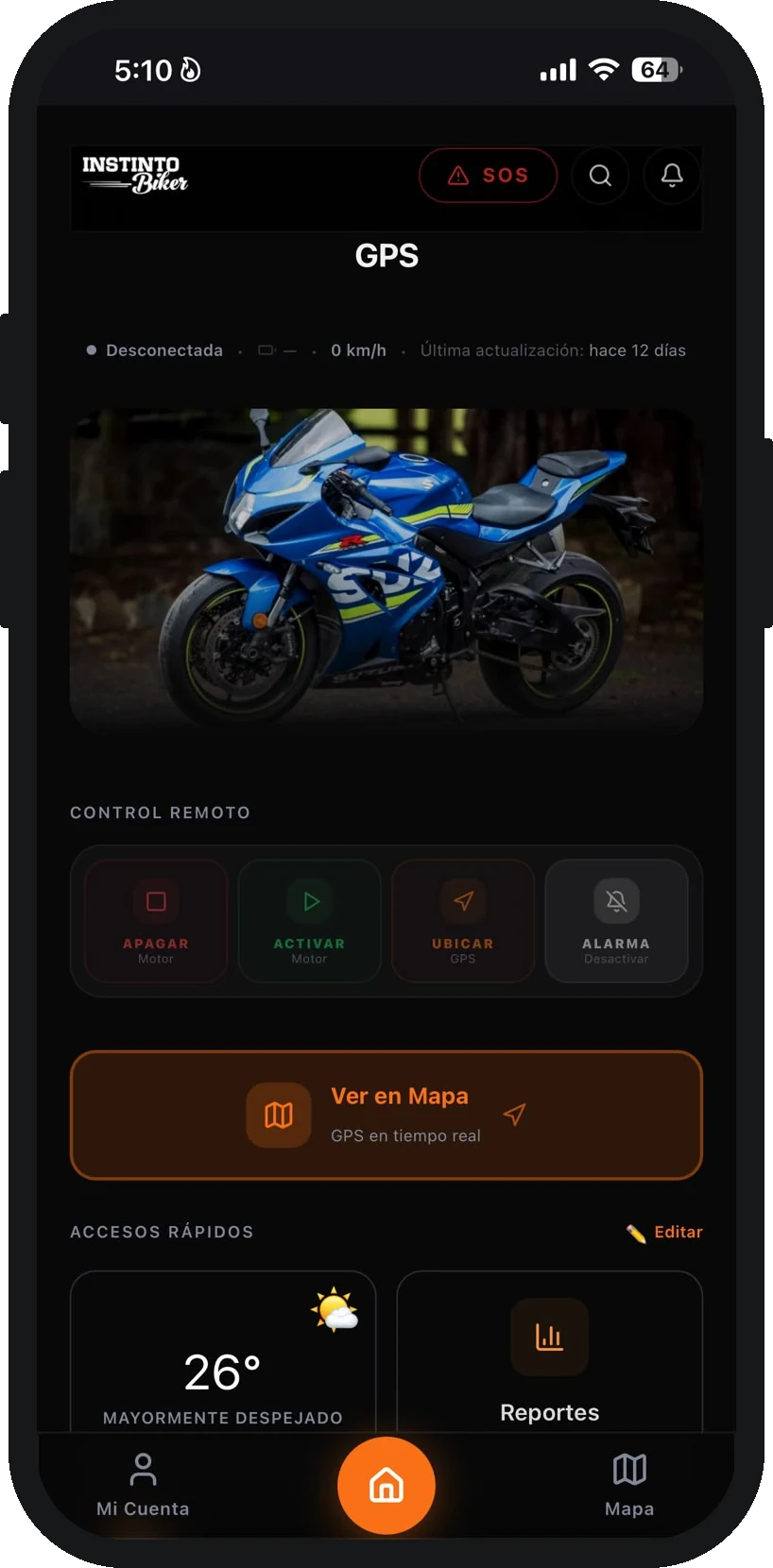
Instinto Biker, a motorcycle security company in Mexico City, rented the GPS tracking platform it operates on from an outside vendor, paying a fee for every user every year. Fyware built them their own: a mobile app for iOS and Android, the web tracking platform and a custom CRM.
Across the customers already migrated the per-user fee is gone entirely, the investment returns around 27% a year, and one year of the previous rent cost 1.8 times what building the platform cost. Their CFO, Dayana Chávez, states on Clutch that this met a seven-year strategic goal: owning their technology.
What was built is an owned vehicle tracking platform: the app the end customer uses, the panel the company operates from, and the CRM where sales and service are logged. Three pieces that used to be someone else's monthly license.
How it was decided
Renting is cheap the first year and expensive every year after
The problem
Every new Instinto Biker customer was one more line on the vendor's invoice. Cost grew at exactly the same rate as the business, and the company could not change a screen, add a notification or ship a new product without asking and waiting.
The call, which is theirs
Leadership chose to build instead of keep renting, and to absorb the months where you pay for the build and the rent at the same time. That is a treasury decision, not a technology one, and a CFO made it with the number in front of her.
What we built
The iOS and Android app, the web tracking platform with a live map, geofences, history and reports, and a custom CRM for sales and service. Two phases, delivered and running.
What the customer carries
An app that does more than show where the bike is
The previous version ran on the rented platform and only located the bike. The owned one puts what used to be three steps and a phone call on a single screen:
- Remote engine control, off and on from the phone.
- Alarm and an SOS button in plain sight.
- Live location with speed, heading and device battery.
- Geofences and history, so you know where it is and where it has been.
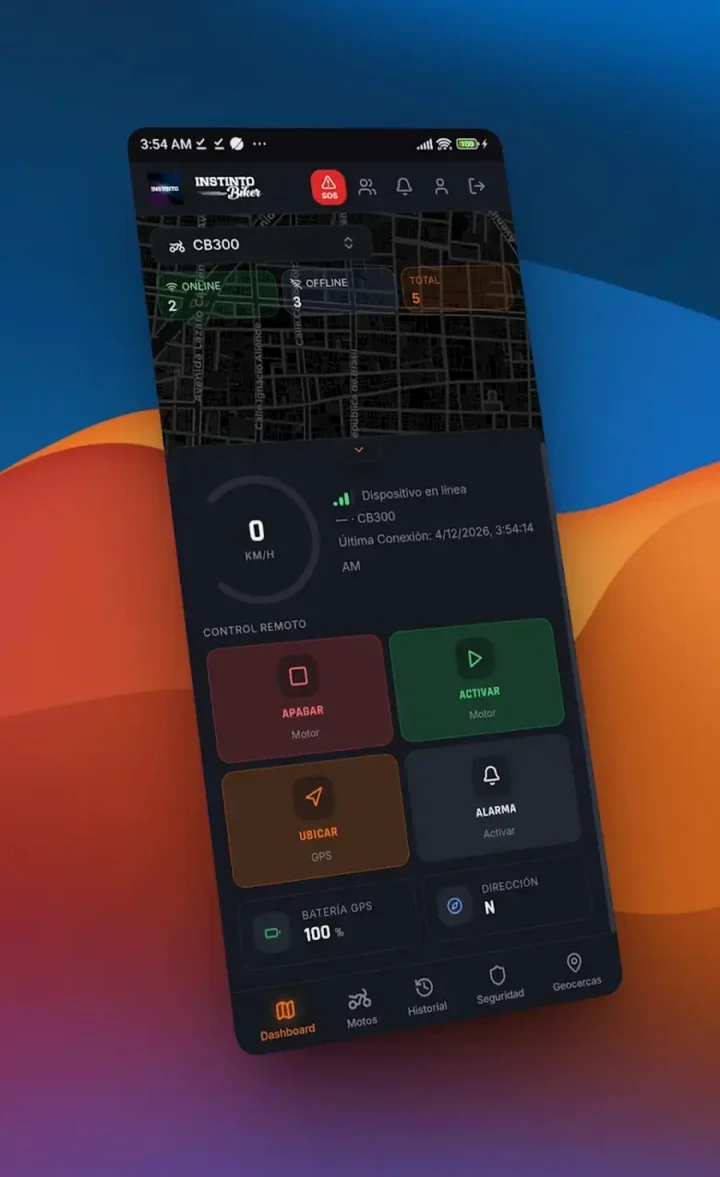
The platform in operation
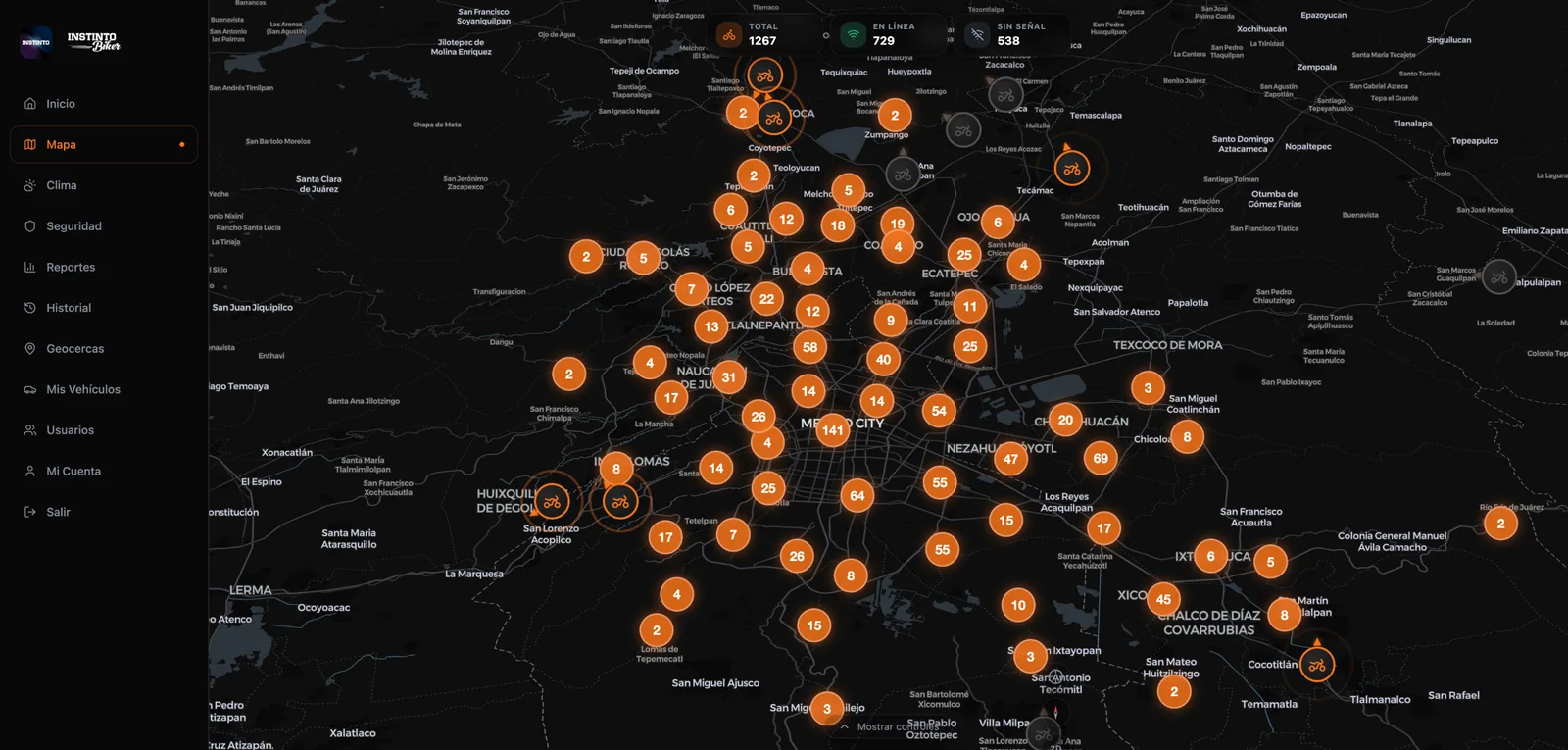
The whole fleet on the map, clustered by area. It is the view all five branches operate from, and it drills down to street level.
“We’ve never felt like they’re trying to sell us more work than we need.”

“They don’t limit themselves to coding what they are asked for; they bring ideas and recommendations that improve the final product.”
Translated from the original review, published in Spanish on Google.
Project sheet
- Client
- Instinto Biker SA de CV, Mexico City
- Sector
- Security and tracking for motorcycle riders
- Scope
- iOS and Android app, web tracking platform and custom CRM
- Investment
- Two phases, worth a little over half a year of the previous rent
- Before
- Platform rented from an outside vendor, with a fee on every user every year
- Rollout
- Registrations from May 2026; from June all branches but one, which still runs on the previous platform
- Pace
- A steady stream of registrations every day since launch
What makes it work
Four decisions worth repeating
- They migrated branch by branch: renewals first, then one branch, then the rest.
- The vendor's per-user cost is what makes renting and building comparable at all.
- App, panel and CRM shipped as one system.
- The code and the infrastructure belong to the client, which is what keeps the decision reversible.
The recovery protocol with the authorities, the branch network and the relationship with each rider belong to Instinto Biker, and they are the business. We built the software they run it on. We say so because on a project like this it is easy for the vendor to take the whole medal.
Is it worth building your own platform instead of renting it?
On this case's ratios, yes, and the reasoning is short. The outside vendor charged a fee for every user every year, so cost grew at exactly the same rate as the customer base. Moving to an owned platform removed that charge entirely: growing no longer makes the operation more expensive, and the saving rises with every new signup.
A build behaves the other way round: it is paid once, and what keeps costing after that is the server. So what a finance director looks at is the time it takes to pay for itself. Dayana Chávez puts that at December 2026, measured against what Instinto Biker paid the vendor every year.
Put in ratios, which is how it carries over to a company of a different size: one year of that rent, at its highest, cost 1.8 times what building the owned platform cost.
Two different moments are worth keeping apart. The figures in the header are the full-effect ones: once migration finishes and the rent stops entirely, the investment returns 183% a year and pays for itself in seven months measured against their highest year with the vendor, and closer to 125% against the years when spend fell. Today, with only part of the base migrated, the investment already returns around 27% a year, and that share rises with every new signup. Migration is not finished: one of the operations still runs on the previous platform, and while that holds the rent does not stop entirely. The first figure is where it is going; the second is where it is.
And there is a part that does not fit on a spreadsheet, the one Dayana Chávez puts first: with a platform of their own, a Mexican company their size competes on technology against far larger global operators, and can improve the service it gives its customers at its own pace. Changing the wording of a notification used to be a request to a third party and a wait; today it is a task. That is what their review calls, in as many words, a seven-year goal.
Frequently asked questions
I pay a vendor every year for the platform my business runs on. What does leaving cost?
Here building the app and the platform cost a little over half of what the company paid in a single year of rent at its highest. Across the customers already migrated the per-user fee is gone entirely and the investment already returns around 27% a year; once the rent stops completely the annual return reaches 183% and the build pays for itself in seven months, measured against their highest year with the vendor. Building is paid once; rent is paid every year and grows with every new user.
Is building my own app more expensive than continuing to rent it?
It depends on your user count and how fast you grow. Rent scales with users and a build does not: what keeps costing after you build is the server. So the number that matters is how many months it takes to pay for itself out of what you already pay someone else.
If I hire an outside team, who owns the code?
The client does. The Instinto Biker app is theirs, it runs on their infrastructure and another team could pick it up. That is the difference between hiring development and renting a platform: with rent, the day you leave you take nothing with you.
 Tom Klukowski
Fyware Partner · Valcre Marketing
Want a result like this in your operation?
Fyware has delivered 750+ XR projects for clients like Gerdau Corsa, Cummins and Medverse, from Mexico in US Central Time. Tell us your case and we will tell you what is feasible, how long it takes and what it costs.
We bring the team that builds it: app, platform and CRM, with the code and the infrastructure in your name.
See Team as a Service Sterile procedure, Medverse
 Team as a ServiceThe full line
 Immersive web and appsThe full line