
Tom Klukowski
Fyware Partner · Valcre Marketing
How can we help?
What it adds to your plant's dojo
Four situations a physical dojo cannot put in front of people without putting them at risk.
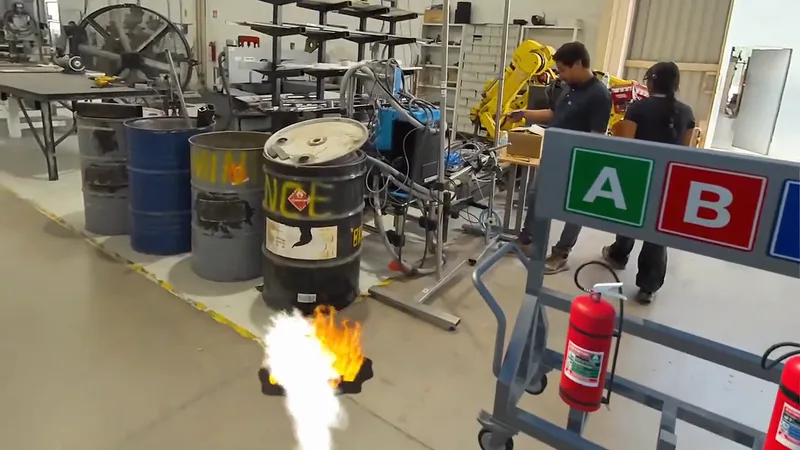
The fire, with the extinguisher in hand
Five fire classes and one minute ten to control it. Pick the wrong agent or aim badly, and the fire grows in front of the person.
See the simulator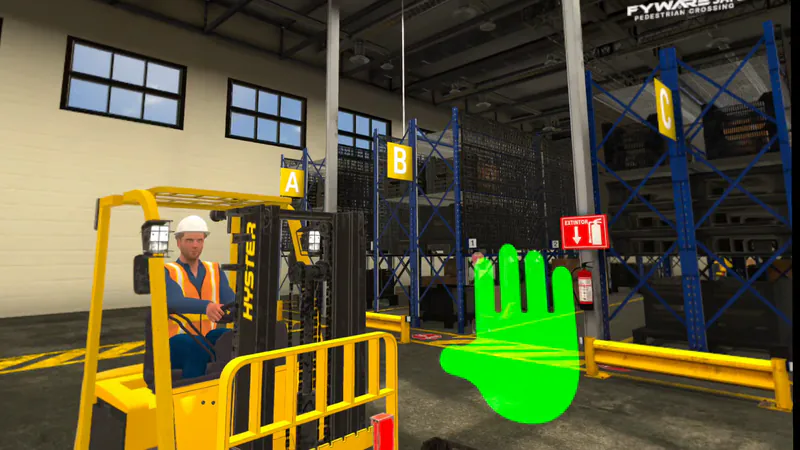
The pedestrian in front of the forklift
From the cab, three circuits with a pedestrian who crosses without warning. From the aisle, the crossing protocol: stop, look three times and wait.
See the simulator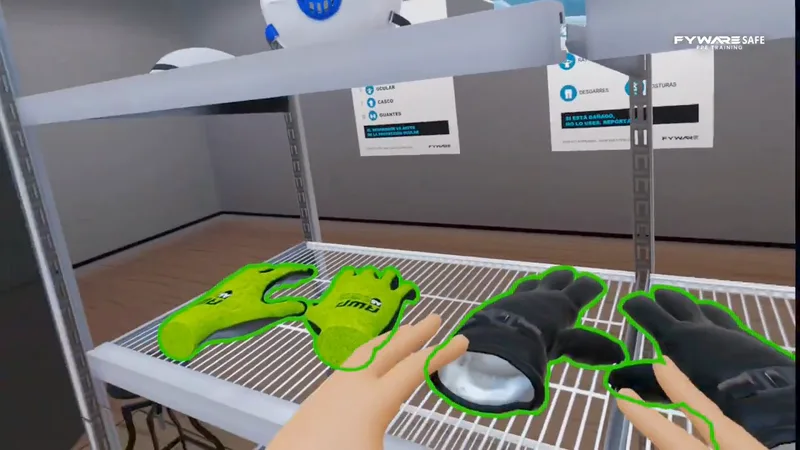
Protective equipment, picked by hand
Among good, damaged and wrong-industry pieces. Rejecting the cracked helmet or the torn glove is part of the exercise.
See the simulator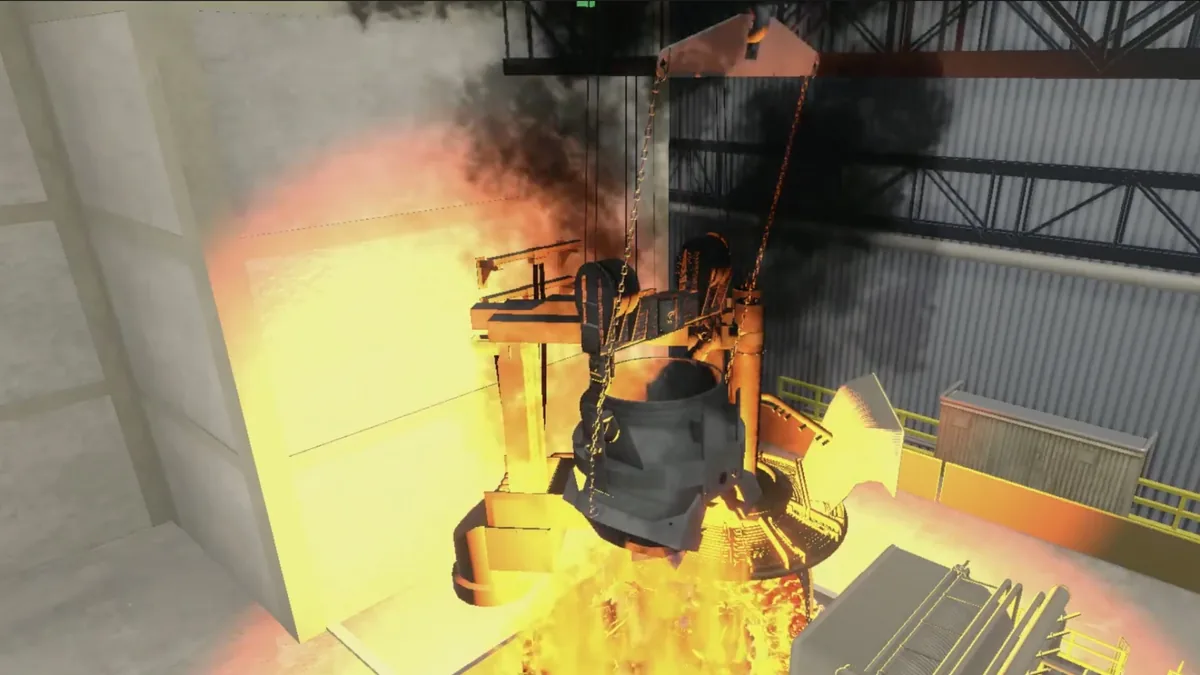
Your own equipment's maneuver
Custom built: the simulator of your machine, with its controls and your procedure, like the Gerdau Corsa overhead crane.
See the simulatorHow it fits into the dojo
One area with two to four headsets
Each module runs on a standalone Meta Quest 3 headset, with no PC or internet connection. The fire and protective equipment modules need a clear 2 × 2 m area per headset.
In stations, next to the physical practice
The group rotates between the talk, the physical station and the virtual station. What the dojo already does stays the same.
15 to 20 people per hour on one headset
That is the pace of the protective equipment module in continuous rotation, with runs of 90 seconds to two and a half minutes. The pedestrian crossing module takes about 4 minutes per person and the forklift module 15 to 20 per operator.
Six languages on the same headset
The pedestrian crossing module carries Spanish, English, Portuguese, French, German and Japanese in the same build, for crews from several countries.
The physical dojo and the virtual one, each with its job
Neither replaces the other: each one practices what the other cannot.
Physical dojo and virtual dojo| | Physical dojo | Virtual dojo |
|---|
| What it does best | The standard sequence, repeated on the real equipment | The risky situation that cannot be recreated |
|---|
| The mistake | It is corrected before it happens | It happens, and you see what it causes |
|---|
| The equipment | The plant's stations and tools | Standalone headsets with each module's simulator |
|---|
| Production | Off the line | Off the line |
|---|
| What is left at the end | The practice and the trainer's signature | The result in the headset; the forklift module exports a CSV file |
|---|
Case study
Gerdau Corsa trains its own crane operators
In seven years the program grew from one family of crane simulators to eleven modules: six cranes, the floor-level overhead crane, the electric arc furnace, lockout/tagout, a 360 induction and the platform that hosts them.
11training modules delivered
Program catalog, August 2026.
10 hof simulator time per month
Figure reported by the plant.
0production stops for training
Practice happens away from the equipment.
Frequently asked questions about the virtual dojo
Does the virtual dojo replace the plant's dojo?
It adds to it. The standard sequence is still practiced on the real equipment and the virtual dojo adds the risky situations that cannot be recreated there. Skills records and the authorization to operate stay with the company.
How much space does it need?
A clear 2 × 2 m area per headset for the fire and protective equipment modules, standing. The forklift module is done seated in a chair, and the pedestrian crossing module is walked: each real step counts as one and a half inside the headset.
Does it need internet or anything installed on the plant network?
No. Each module runs on a standalone Meta Quest 3 headset, with no PC or internet connection.
More questions
What gets recorded?
The result shows in the headset at the end of each attempt. The forklift module exports the session results in a local CSV file; custom simulators can carry their own platform with per-person reporting, like the Gerdau Corsa program.
Let's talk about your plant
Tell us what you want to solve in your plant. Fyware designs extended reality around the equipment and constraints of your operation, and builds it to grow from a pilot to the whole site.
Tom Klukowski, Fyware Partner · Valcre Marketing We reply in under 24 business hours, with scope, timeline and investment range. In the meeting you see the simulator running and what it would take to bring it to your plant, with scenarios adapted to your layout. And if you need to sell it internally, this page is your presentation: share it with your team.