
Familiarization Trainer: Why We Prefer That Name to Simulator
 By Carlos Franco, Co-Founder & CEO at Fyware · LinkedIn
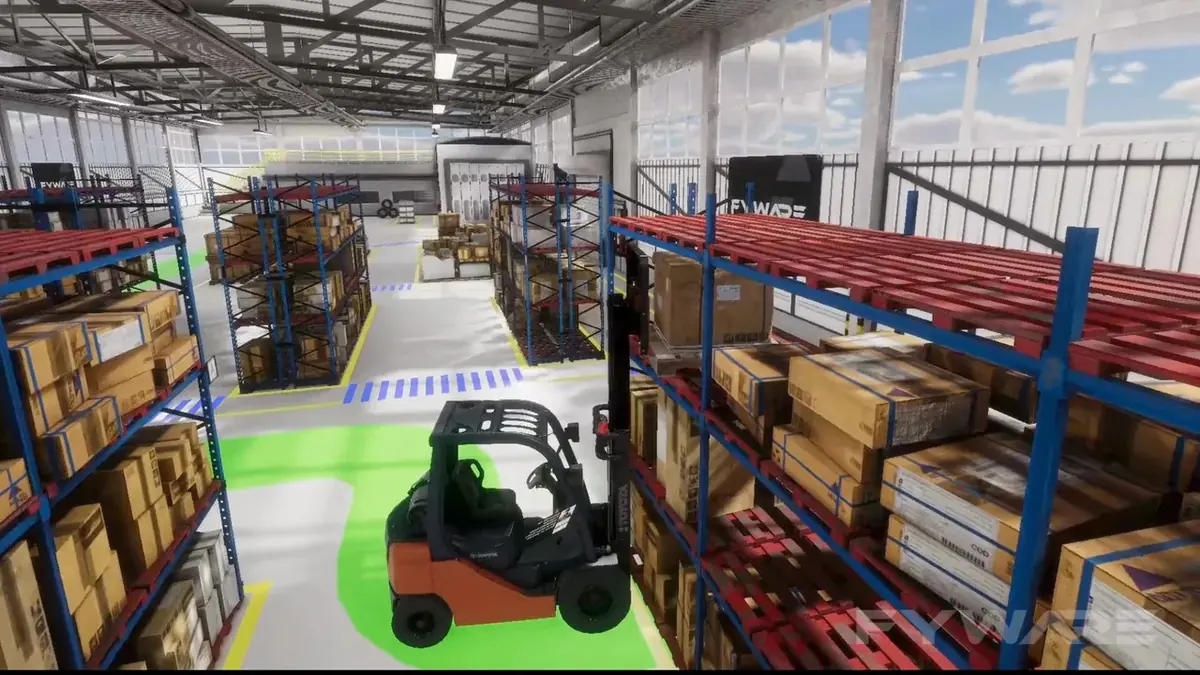
The short answer: a familiarization trainer is a VR training simulator with one precise job: the operator reaches the machine knowing where every control is and in what order the sequence runs. We prefer that name because there are manipulations and skills virtual reality does not reproduce one hundred percent, and those are learned on the equipment.
In aviation, simulator is the cabin where a pilot logs flight hours. The device where that pilot first learns the cockpit, which switch sits where and in what order a procedure runs, goes by another name: a familiarization trainer.
The word is borrowed. An aviation client called what we built with them a familiarizador, Spanish for familiarization trainer, and the name stayed with us.
I use it for plant equipment now, for forklifts, cranes and presses, because it says what the tool is for.
What is a familiarization trainer in a plant?
It is a training simulator built on your equipment and your procedure so that a person knows the machine, its controls and the sequence before touching it. People who look for one type "simulator" or "VR training," and that is why our page is called custom VR training for industry. On the plant floor we call it a familiarization trainer, and the name says what it is for.
What gets copied faithfully is the space: where each control sits and how far it is from the next one. Inside the headset the panel stands at the same height as on the floor, and the operator reaches for the start button where it will be.
The screens of a control panel can begin as screenshots of the plant's own panel, with only the buttons of the procedure responding. For a first version that is enough, because what the operator carries to the machine is the layout and the order of the steps.
What the word simulator overpromises
Simulator suggests an exact copy of the operation. Some buyers arrive convinced it replaces practice on the machine, and I cannot recommend it on those terms.
A simulation that matches reality one hundred percent is hard to reach. There are manipulations and skills virtual reality does not fully reproduce: inside the headset the part has no weight and the lever offers no resistance. The fine adjustment an operator makes from memory after years is earned on the equipment. A simulator built to replace that practice costs several times more, and the practice is still needed.
That is why we prefer the other word. With a familiarization trainer, the scope discussion stops being a fight: the job is that the operator's first time in front of the equipment is no longer a first time, and that job can be delivered in full.
What you gain from equipment familiarization training
The familiarization trainer works as pre-practice: a stretch between theory and the machine where a mistake costs nothing, because the person is off the line and nobody is timing them.
The machine stops halting to teach. In the crane program at Gerdau Corsa, the plant reports 10 hours of simulator time a month and zero production stops for training.
It serves new hires first, the people whose learning curve the plant pays for on the line. The meta-analysis by Burke and colleagues in the American Journal of Public Health, 2006, across 95 studies and 20,991 workers, found that the methods that make people participate and practice are the ones that reduce accidents and injuries the most.
It also measures, if you ask for it: it records the time of each maneuver and the collisions, against the criteria your plant writes. At Gerdau Corsa those criteria belong to the plant.
Practice on the equipment stays with the plant. For forklifts, OSHA's 29 CFR 1910.178(l)(2)(ii) requires formal instruction, practical training and an evaluation of the operator's performance in the workplace, and the familiarization trainer comes first.
How much it costs and how to start
Before quoting, I ask the plant to write the scope: a single process to start with, the one closest to a serious accident, and what has to be identical to its equipment. The questions for the vendor are in how to choose a VR training simulator for operators.
A custom familiarization trainer starts at $45,000 and takes about three months. A more basic version, focused on awareness, starts at $15,000.
If you would rather try it with your people first, VR equipment rental always comes with a Fyware technician on site; in Mexico it starts at $5,000 MXN a day.
And if you already know which process worries you, the Diagnostic Pilot starts at $5,000 USD and is credited to the full project. In about three weeks we deliver a navigable prototype of one of your procedures and a business case.
Frequently asked questions
What is a familiarization trainer?
A VR training simulator whose goal is that the operator knows the machine, its controls and the sequence before touching the equipment.
Are a familiarization trainer and a training simulator the same thing?
Yes, it is the same tool. Simulator is the word people search for; familiarization trainer describes better what it delivers.
Does a familiarization trainer replace practice on the machine?
No. It comes first, as pre-practice. Practice on the equipment stays with the plant.
How much does a custom familiarization trainer cost?
It starts at $45,000. The basic version, focused on awareness, starts at $15,000.
 Tom Klukowski
Fyware Partner · Valcre Marketing
Before we quote, we check whether virtual reality fits your operation
Fyware has delivered 750+ XR projects for clients like Gerdau Corsa, Cummins and Medverse, from Mexico in US Central Time. Tell us your case and we will tell you what is feasible, how long it takes, and on what budget.
Get the next articles
Practical guides on VR, AR and industrial training. No spam: we only write when we publish.