

Production line in augmented reality
Installed in someone else's plant. Now in yours too.
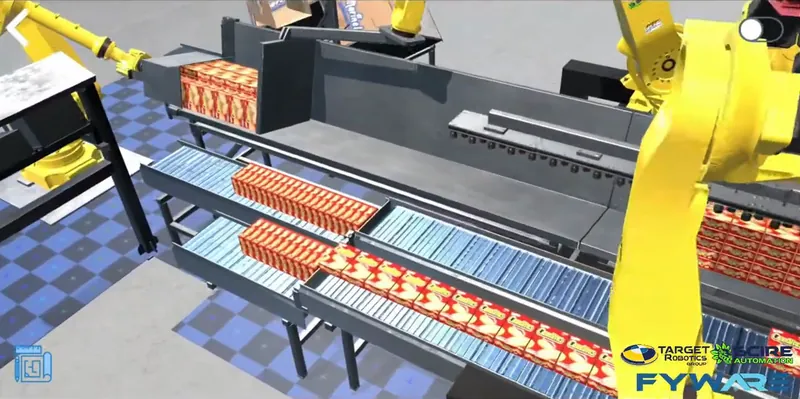
Target Robotics has been integrating robotic production lines across Mexico, from San Luis Potosí, for more than twenty years. We built an augmented reality model the salesperson places at full scale on the buyer's own floor, and a virtual reality version to walk it inside a plant.
- Industry
- Robotic integration
- Use case
- Industrial equipment sales
- Technology
- AR on a tablet, virtual reality and WebXR
Target Robotics is a robotic production line integrator based in San Luis Potosí with more than twenty years operating across Mexico: palletizing, packaging, box forming, plasma cutting, welding and vision systems. Fyware built them the industrial machinery visualization of that line: a model in augmented reality that the salesperson places at full scale on the buyer's own floor from a tablet, a virtual reality version that sets the same line inside an industrial plant with an operator beside it, and a WebXR publication that opens in a browser with nothing to install. All three come from the engineering model the line was designed to be built from.
The figures and their source: one fewer meeting in the sales cycle, the one spent explaining how the line fits in the customer's space, reported by Target Robotics; three ways to see the same line, which are the three deliverables; and zero trips to see it running, because previously the buyer had to be driven to someone else's plant where one was already installed. The line, the engineering and the commercial judgment belong to Target Robotics. Nobody measured trips avoided or close-rate movement, which is why no percentage appears anywhere.
Try it here
The line, spinning on this page
This is the same model from the tour, published in WebXR. Spin it, move in on the arms and follow the conveyor end to end. There is nothing to install.
How it started
Selling something that only exists inside somebody else's plant
The challenge
Once installed, a robotic line lives inside a customer's plant. Showing it meant one of two things: a video, which does not convey size, or driving the prospect out to a third party's plant, with the cost that carries and the permission you have to ask for. And while the line was still being built, there was nothing to show at all.
What Target Robotics brought
The engineering and the product. They design and integrate the lines, and the 3D models everything was built from came out of that design. Also the commercial judgment: they knew exactly where the sales conversation stalled, which was the moment the buyer had to imagine the size.
What we built
The augmented reality model placed at full scale on the floor, the virtual reality version to walk the line inside an industrial plant, and the WebXR publication to open it from a browser. The project started as an application because WebXR did not exist yet.
A video does not convey size
A video of a line running exists and is useful for plenty of things, but there is one it cannot do: tell you whether it fits. Somebody buying a production line is not evaluating whether the robots look good. They are working out how much of their plant it will take, where product comes in, where the operator stands and whether the forklift still gets through.
In a meeting, that calculation was done by the salesperson with a floor plan and their hands. And because it is a calculation the buyer cannot verify, it was settled with one more meeting: another visit, or a trip to see a similar line already installed at another company.
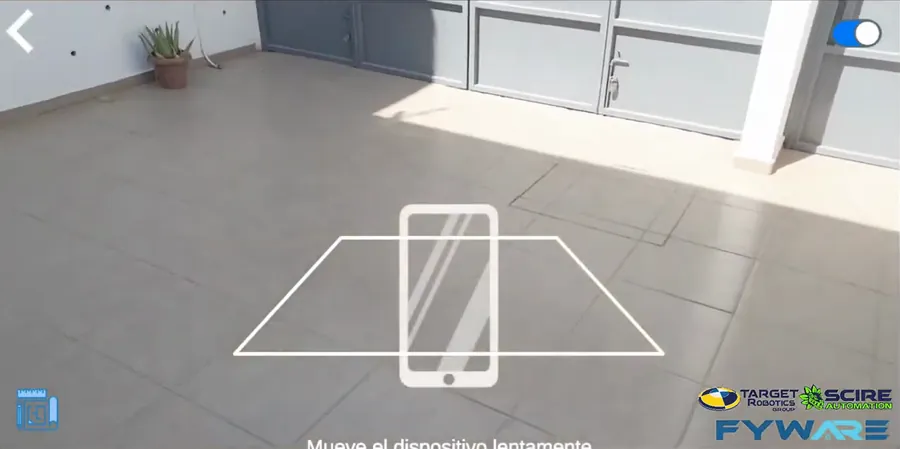
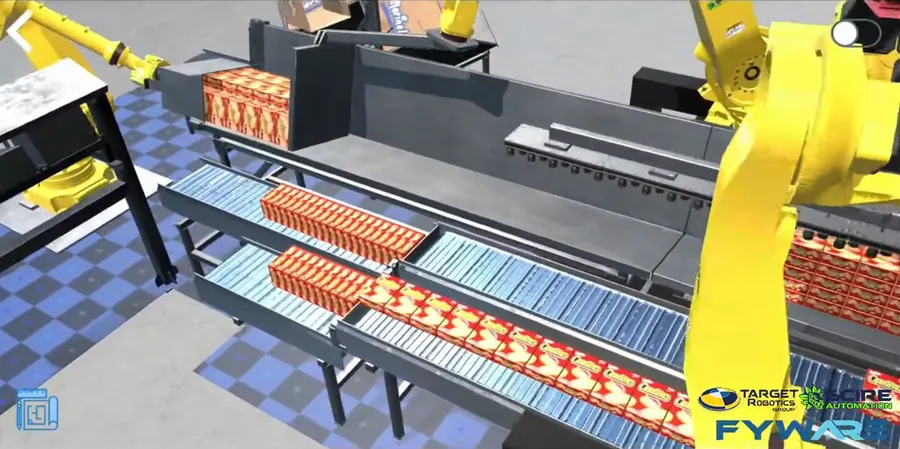
With the full-scale model that conversation changes in kind. The salesperson points the tablet at the empty floor, the line appears and the buyer walks around it. They see the real length of the conveyor against their own wall, stand where the operator would stand and look toward the arm. They stop calculating and start seeing, which is precisely the meeting that gets saved.
The two tools, and what each is for
Augmented reality first, virtual reality after
The original project, and still the main one, is the augmented reality build: the line in your space. That is the sales tool, because it answers the buyer's question using the buyer's own floor.
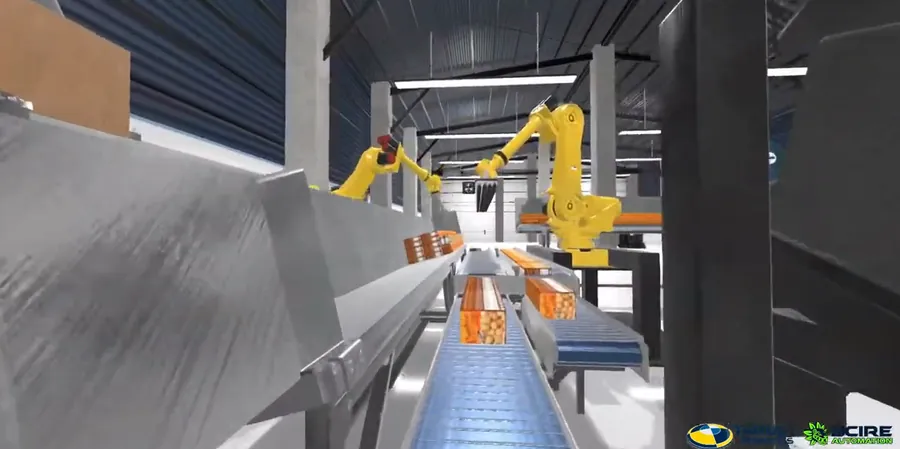
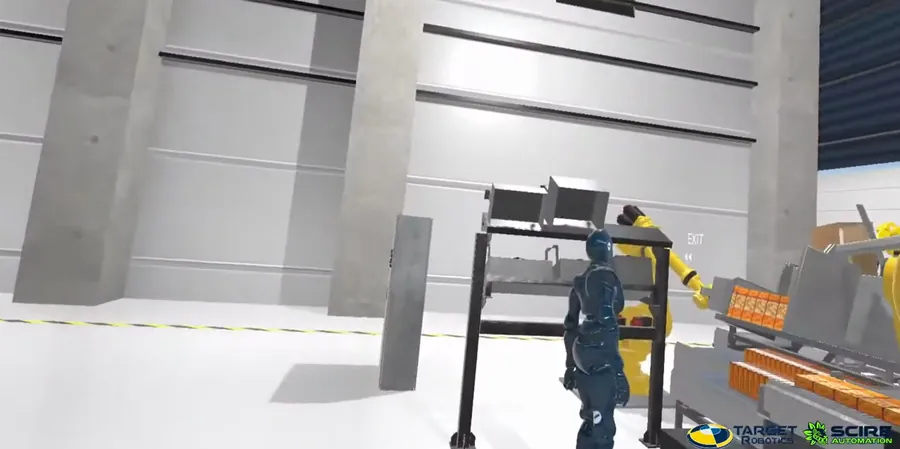
The virtual reality version came later and solves the opposite problem. There the line sits inside a complete industrial plant, with a ceiling, ducts, a workstation and an operator beside it. It works when what you need to show is how people work around it: the flow, the safety distances, where somebody stands. That is the conversation with the plant engineer.
Both come from the same model. The engineering already existed because the line was designed to be built, so the work was preparing that model to run smoothly on a handheld device and giving it the right scale.
And then, in the browser
When the project started, WebXR did not exist yet as a real option, so it shipped as an application. Over time it was also published to the browser, which is the version embedded further up this page.
The change is about reach. An application gets installed by somebody who already decided they are interested; a link opens for anyone, from the follow-up email or from a phone in their own customer's meeting room. The application is still the right one for an in-person visit, where the salesperson controls the device and the experience. The browser covers everything else.
Project details
- Client
- Target Robotics, San Luis Potosí
- What they do
- Robotic integration of production lines: palletizing, packaging, box forming, welding and vision systems
- Deliverables
- A full-scale augmented reality model, a virtual reality walkthrough and a WebXR publication
- Where the 3D came from
- Target Robotics' own engineering design, optimized for handheld devices
- Where it is used
- On the sales visit, on the buyer's own floor
- Relationship
- Several years and more than one project
Target Robotics reports three effects: the company is perceived as more innovative by its buyers, lower travel costs for plant visits, and one fewer meeting in the sales cycle, the one spent explaining how the line fits in the customer's space.
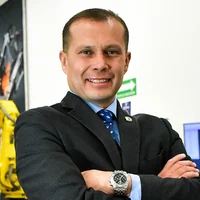 José Luis VillalónGeneral Director, Target RoboticsReported from the conversation of August 2026
What makes it work
Four decisions worth repeating
- Start from the engineering model that already exists, prepared to run on a handheld device.
- Go full scale: the argument is size, and at table scale the argument disappears.
- Split the two conversations: the buyer wants to know if it fits, the engineer how people work around it.
- Publish it to the browser too, so it travels where the follow-up already travels.
The line, the engineering and the commercial judgment belong to Target Robotics. We built the three ways of showing it. And it is worth saying what this case does NOT claim: nobody measured how many trips were avoided or how much their close rate moved. The three effects above are what the client reports, and that is how they are published.
Frequently asked questions
How do I show a machine that does not exist yet, or that is already installed in someone else's plant?
With an augmented reality model placed at full scale on the buyer's own floor. The salesperson arrives with a tablet, points at the empty space and the line appears there at the size it will actually be: the buyer walks around it, sees how much room it takes, where product enters and whether it fits. That is a conversation you could previously only have by flying them to a plant where one was already installed, or by showing them a video of somebody else's.
What do you need from my side to build something like this?
The 3D model of the machine or the line, which usually already exists because it came out of engineering, and a decision about what has to come across: if the argument is the footprint, the model is optimized differently than if the argument is the robot's movement. From there the model is prepared to run smoothly on a handheld device, given real-world scale, and wrapped in an interface to place it and walk around it.
Is this a digital twin?
No, and it is worth being clear because they are different things. A digital twin is connected to the real machine's data and reflects what is happening on it right now. What was built here is full-scale visualization: the model behaves like the line, but it is not reading sensors. That said, connecting it to live data is the natural next step and can be built together with the client's automation team, who know the line's controls.
 Tom Klukowski
Fyware Partner · Valcre Marketing
Want a result like this in your operation?
Fyware has delivered 750+ XR projects for clients like Gerdau Corsa, Cummins and Medverse, from Mexico in US Central Time. Tell us your case and we will tell you what is feasible, how long it takes and what it costs.
“They have been innovative and relentless in solving very technical issues.”
 Paul A. LiberatoreOwner/CEO, Access Flight Training Services LLCPublic review on GoodFirms, 5 stars · August 2026
It is how you sell an automated line before it is installed. Same approach, your equipment: we take the 3D model your engineering already produced and stand it at full scale on the floor of the person about to buy from you.
See brand experiences AR catalog
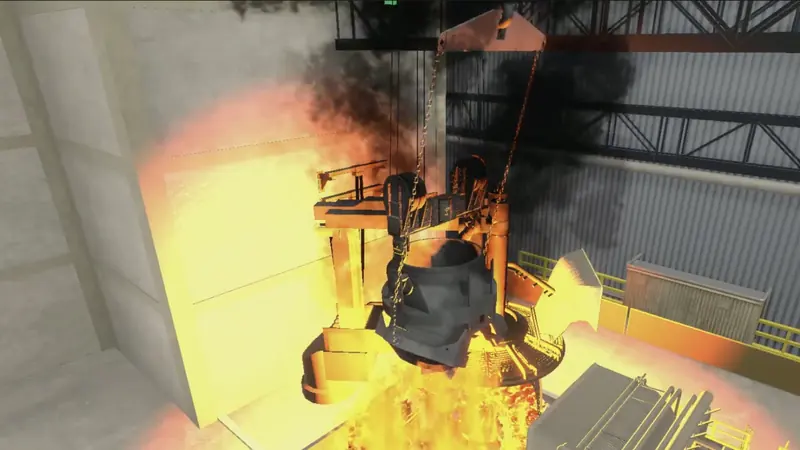 Crane simulator
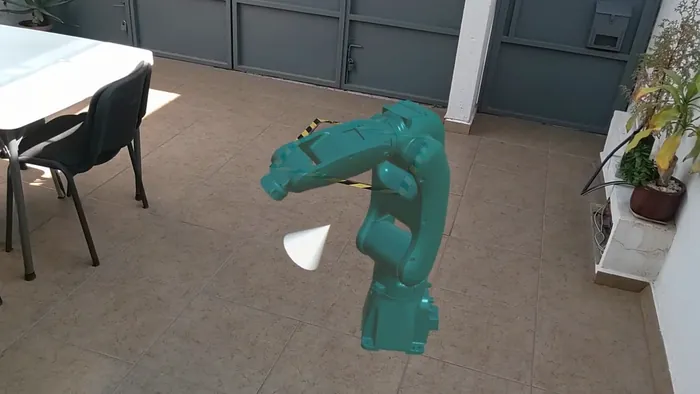 Industrial robot digital twin
 ExperiencesThe full line