

VR integration for a portable flight simulator
The pilot reaches for the switch. With their own hands.
Access Virtual built and patented a portable full-motion flight simulator. Fyware built the layer that puts a pilot inside it: a 180-degree headset, hand tracking and haptic gloves, integrated so the cockpit answers to hands instead of controllers.
- Industry
- Flight training
- Use case
- VR integration for a flight simulator
- Technology
- XTAL 3 headset, hand tracking and bHaptics gloves
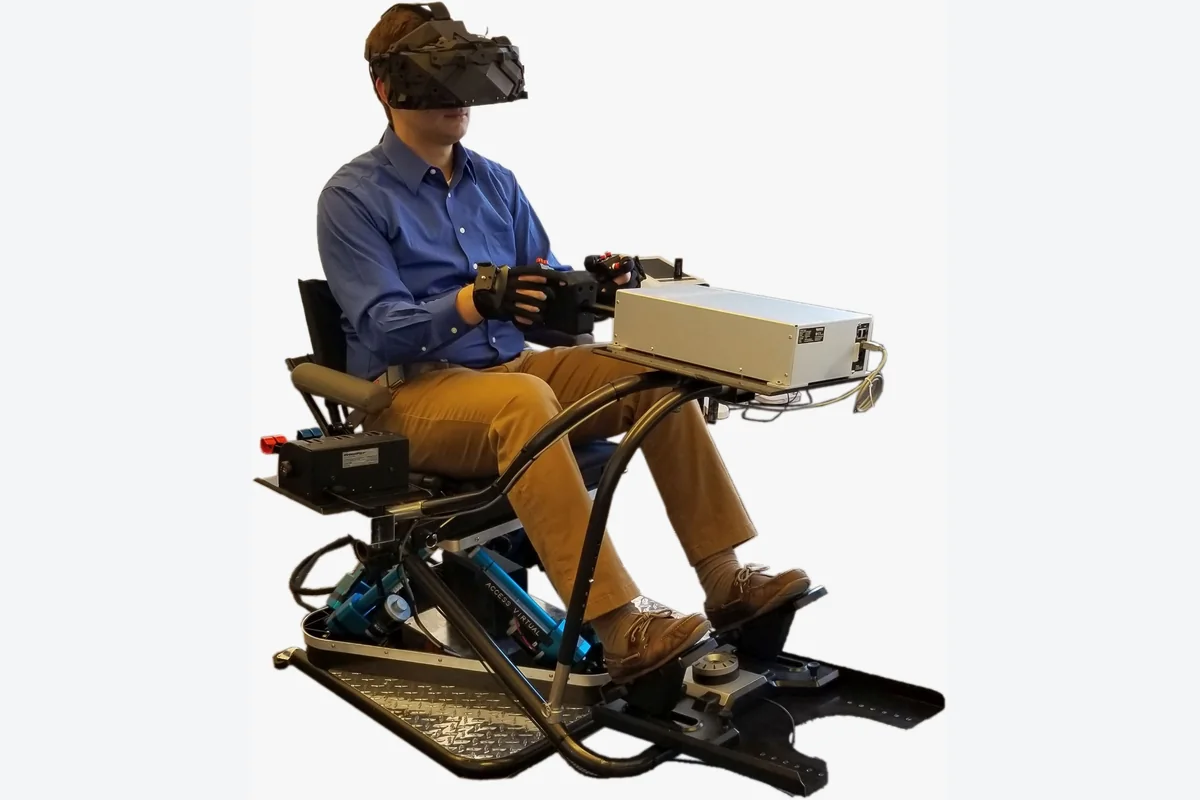
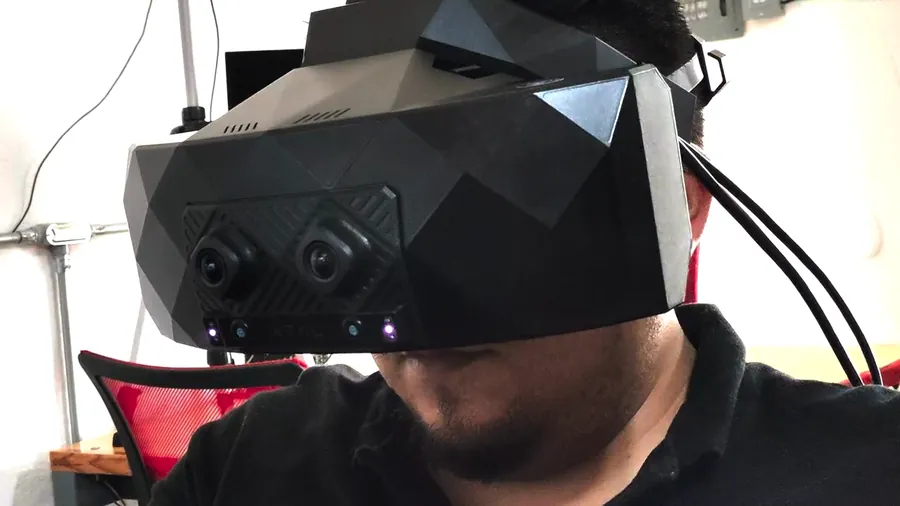
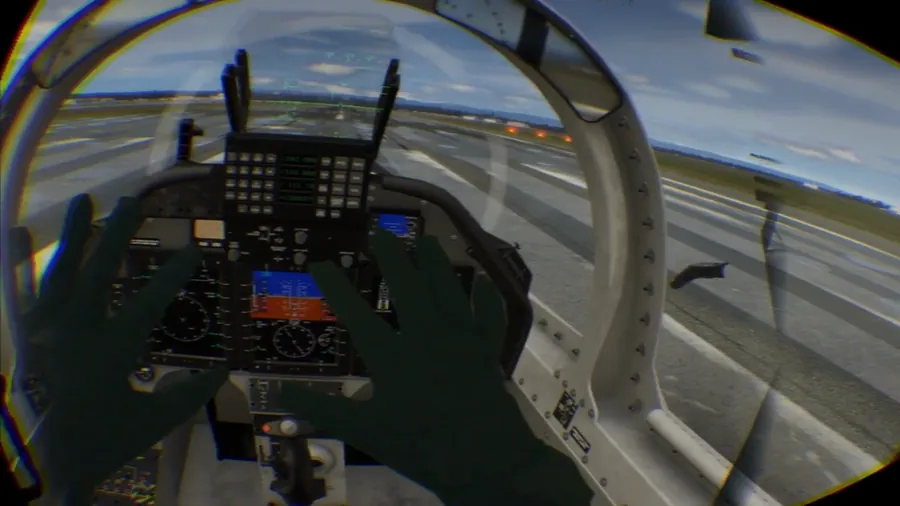
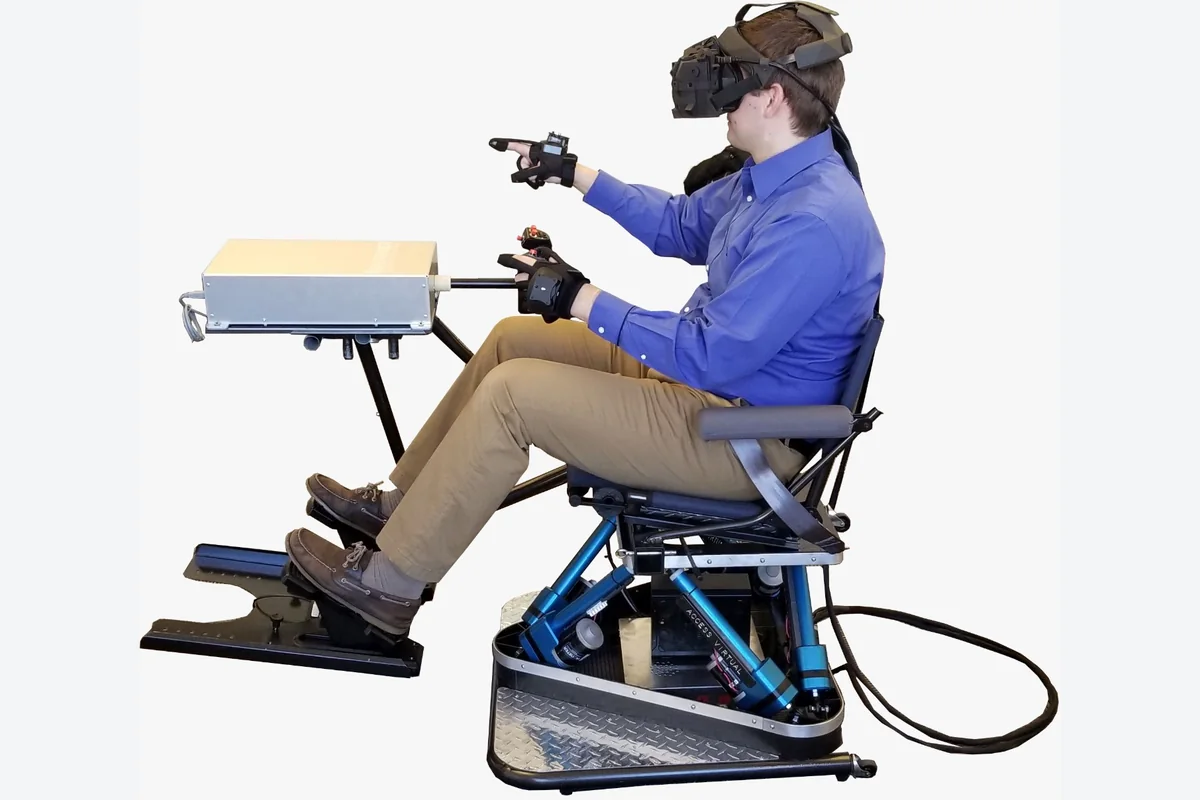
Access Virtual develops the Access Virtual ADVANCED VR SIM, a portable flight simulator with full motion and six degrees of freedom, built and patented by a retired military aviator. Fyware is part of that development team and built the extended reality layer: the integration of an XTAL 3 headset with a 180-degree field of view, hand tracking so the pilot sees and uses their own hands in the cockpit, and bHaptics gloves so pressing a button returns something to the fingers. The peripherals talk to the simulator through engines we wrote for that purpose.
Where each number comes from: the 180 degrees are the headset manufacturer's specification; the zero controllers are the delivered scope, and the reason the project exists; the six degrees of freedom and the three cases are Access Virtual's own claims, from their campaign, and so is the FAA Level D standard their simulator is engineered to. The cockpit reconfigures to whichever aircraft is required. The project has run for several years in bursts of development and improvement, more than five people from Fyware have worked on it, and it is still active.
What we built is the extended reality layer of a flight simulator: the part that decides whether a pilot inside the cockpit believes they are in a cockpit.
How it was decided
High fidelity used to mean a machine the size of a building
The challenge
For decades a high-fidelity simulator meant special power, special cooling and one machine locked to one aircraft. That is a building, a budget and a location, and it puts unlimited practice out of reach of most pilots who need it.
Theirs, and patented
Access Virtual rebuilt the machine: full motion, six degrees of freedom, a cockpit engineered to the standard of an FAA Level D device, that fits in three cases and runs on a standard wall outlet. The assembly is patented and the patent is theirs.
What we built
The layer a pilot actually experiences: the XTAL 3 integration and its 180-degree view, hand tracking running in parallel with the headset, the bHaptics gloves, and the engines that keep every peripheral agreeing on the same cockpit.
The hardware and the hands
Four pieces of the same problem: the machine itself, a view as wide as a canopy, hands that are visible where the pilot expects them, and fingers that get an answer when they press.
What makes it work
Five decisions worth repeating
- Field of view was treated as a hard requirement. A pilot who cannot see where the canopy ends loses the cues that matter on approach.
- No controllers. Hand tracking and gloves instead, because a pilot's hands are the instrument and pointing a wand at a switch teaches the wrong motion.
- Each peripheral got its own engine. Complex integration is several devices agreeing on one cockpit, and that agreement is code somebody has to write.
- The cockpit reconfigures. The aircraft is a configuration, not a rebuild, so one seat serves more than one type.
- Their own team stayed, and Fyware added capacity to it. Access Virtual kept the product and the patent and added extended reality capacity for years, in bursts, instead of hiring it.
The simulator, the motion platform and the patent are Access Virtual's. We built the extended reality layer as part of their own development team, which is how Team as a Service works: they keep the product and the roadmap, we put in the extended reality capacity when the work needs it. Their review says it in their words, “a valued member of our development team”.
What this case does not claim, and it is worth saying. The FAA Level D standard, the three cases and the standard wall outlet are Access Virtual's claims, taken from their own campaign: they are engineering and product claims about their simulator, and Fyware did not measure them. And this page publishes no training-outcome numbers, flight hours or transfer figures, because none were measured on this project. Our scope was the extended reality layer, and that is the only thing this page claims as ours.
Why a wide field of view changes what a pilot can practice
Most virtual reality headsets show a pilot less than their own canopy. They can fly the instruments, but the moment the task depends on what is happening at the edge of their vision, the simulation stops being useful: the runway that should be sliding past their shoulder is simply not there. A 180-degree view puts that edge back, and with it the part of flying that lives in peripheral vision.
The hands are the same argument, one step closer. A pilot who has to aim a controller at a switch is practicing something they will never do again. A pilot who reaches out and finds the switch, and gets an answer in their fingers when they press it, is practicing the motion they will use in the aircraft. That is why this project spent its effort there instead of on prettier scenery.
And there is the consequence of size, which is not our claim but is the reason the whole thing exists. A simulator that fits in three cases and runs on a wall outlet can live where a building cannot: a small hangar, a classroom, or the deck of a carrier. High-fidelity practice stops being something a pilot travels to and starts being something that travels with them.
Project details
- Client
- Access Virtual · portable full-motion flight simulator
- Project
- Access Virtual ADVANCED VR SIM
- Sector
- Flight training
- Fyware's scope
- Extended reality layer: headset integration, hand tracking, haptic gloves and the engines for each peripheral
- Headset
- XTAL 3, 180 degrees of field of view per its manufacturer
- Gloves
- bHaptics
- Hand tracking
- Fyware's own integration, running in parallel with the headset
- Motion
- Six degrees of freedom, in Access Virtual's patented assembly
- Cockpit
- Reconfigures to the aircraft required
- Duration
- Several years in bursts of development and improvement, still active
- Team
- More than five people from Fyware
“They have been innovative and relentless in solving very technical issues.”

The same review calls Fyware “a valued member of our development team” and reports the work delivered on time and on budget. The review covers the whole relationship, this module included.
Frequently asked questions
Does training in a VR simulator transfer to the real aircraft?
For procedures and hands-on skills, the evidence says yes, and it is worth knowing what it depends on. The meta-analysis by Howard, Gutworth and Jacobs (Computers in Human Behavior, 2021) finds a moderate overall effect (d = 0.541) that fades or soars depending on how well the task fits the technology: d = 0.207 when the fit is poor, d = 0.820 when it is strong. That is the argument for training the cockpit sequence in VR and it is also the reason this project spent its effort on the hands: what transfers is what the pilot does with their hands. This case does not publish flight-hour or transfer numbers of its own, because there are none to publish.
Can a VR headset give a pilot a realistic field of view?
That is exactly the constraint that decided the hardware here. Most headsets give a pilot a view narrower than the canopy they are supposed to be flying with, so they lose the peripheral cues that matter on approach and with another aircraft off the wing. The headset integrated in this simulator is an XTAL 3, whose manufacturer specifies a 180-degree field of view, and that is what makes the canopy read like a canopy instead of a window.
Can the pilot see and feel their hands inside a VR cockpit?
Yes, and it takes two separate things. Seeing them is hand tracking: the pilot's real hands are in the cockpit, so they reach for the switch instead of pointing a controller at it. Feeling them is haptics: this simulator uses bHaptics gloves, so pressing a button in the virtual cockpit returns something to the fingers. Fyware built both layers, and the hand tracking is our own integration running in parallel with the headset. No hand-held controllers are involved, which is the point: a pilot's hands are the instrument.
We already have simulator hardware. Can the extended reality layer be integrated without rebuilding it?
That is what this project is. The motion platform, the cockpit and the patent are Access Virtual's; what we built is the layer that puts a pilot inside it: the headset integration, the hand tracking, the gloves and the engines that talk to each peripheral. Complex integration is usually not a question of one device, it is a question of several devices agreeing on the same cockpit at the same time, and that is where the work goes.
Do I need a room-sized simulator for high-fidelity training?
Access Virtual's answer is no, and it is their claim, which Fyware did not measure: their campaign describes a simulator engineered to the standard of an FAA Level D device that fits in three cases, runs on a standard wall outlet and reconfigures to the aircraft required. What that changes is where training can happen: a small hangar, a classroom, or a carrier deck, none of which can host a machine the size of a building.
Can virtual reality be used to train aviation maintenance?
Yes. This case covers flight, but the same technology trains aircraft maintenance: the technician practices the complete procedure on a full-scale model of the equipment, with unlimited repetitions and without grounding an aircraft. As a public reference, Boeing reported a 40% productivity improvement using augmented reality for wiring installation (CNBC).
 Tom Klukowski
Fyware Partner · Valcre Marketing
Want a result like this in your operation?
Fyware has delivered 750+ XR projects for clients like Gerdau Corsa, Cummins and Medverse, from Mexico in US Central Time. Tell us your case and we will tell you what is feasible, how long it takes and what it costs.
Headsets, gloves, tracking and the engines that make several peripherals agree on the same scene, as an extension of your own team. If what you need is the training itself, that is the other half of what we do.
See Team as a Service See Immersive Training